A bedtime routine for better sleep: what really helps
Sleep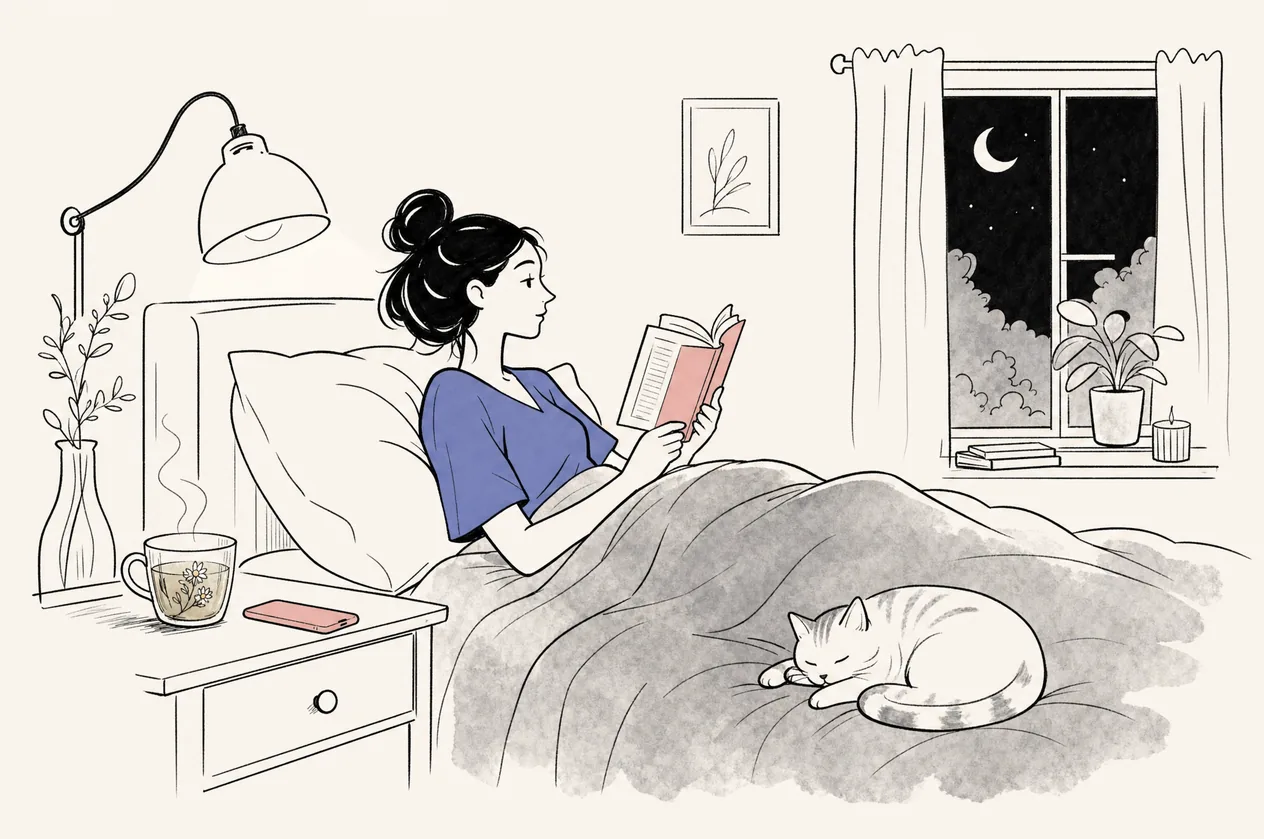
Key points
- A consistent wake time is the foundation, even on weekends.
- Reading on a light-emitting screen before bed delays sleep and melatonin.
- Afternoon caffeine and evening alcohol worsen sleep.
- Sleep hygiene helps prevent problems, but chronic insomnia needs CBT-I.
Why a routine
The body likes predictability. A regular evening routine signals to the brain that it is time to wind down, and a consistent wake time anchors your body clock.
What research says about sleep hygiene
A review of the evidence found that most sleep hygiene recommendations, including a regular schedule, limiting caffeine, alcohol and nicotine, exercise and a comfortable bedroom, are supported by research, though each has a modest effect on its own (Irish et al., 2015).
A 60-minute wind-down routine
- 60 minutes before bed: finish work and chores; dim the lights.
- 45 minutes: put away screens; prepare tomorrow’s things.
- 30 minutes: warm shower, light stretching or slow breathing.
- 15 minutes: read a printed book or listen to calm music in bed.
Why screens keep you awake
In a controlled study, reading on a light-emitting e-reader before bed, compared with a printed book, made it take longer to fall asleep, delayed and suppressed melatonin and reduced alertness the next morning (Chang et al., 2015). Engaging content adds to the problem.
The daytime matters too
- Get morning light and move during the day.
- Have your last coffee by early afternoon.
- Avoid heavy meals and alcohol late in the evening.
Your bedroom
Dark, quiet and cool, with a comfortable mattress. Use the bed only for sleep and sex.
When a routine is not enough
If you have chronic insomnia, a routine alone rarely solves it. CBT-I is the most effective treatment (Trauer et al., 2015).
Frequently asked questions
How long should a bedtime routine be?
About 30 to 60 minutes is enough for most people. Consistency matters more than length.
Is it OK to read in bed?
Reading a printed book in dim light is fine for most people. If you have insomnia, CBT-I usually recommends reading in another room until sleepy.
Sources
- Irish et al. (2015). The role of sleep hygiene in promoting public health: A review of empirical evidence. Sleep Medicine Reviews 22:23-36. doi:10.1016/j.smrv.2014.10.001
- Chang et al. (2015). Evening use of light-emitting eReaders negatively affects sleep, circadian timing, and next-morning alertness. Proceedings of the National Academy of Sciences 112(4):1232-1237. doi:10.1073/pnas.1418490112
- Trauer et al. (2015). Cognitive Behavioral Therapy for Chronic Insomnia. Annals of Internal Medicine 163(3):191-204. doi:10.7326/M14-2841
Keep reading
 Sleep · Guide
Sleep: how much do adults need and why it matters for health
How much sleep adults need according to sleep medicine experts, how short and very long sleep are linked to health and what works for insomnia.
 Sleep
Caffeine and sleep: how many hours before bed to stop
How much caffeine shortens and lightens sleep, the cutoff time recommended by a 2023 meta-analysis and how much caffeine is in common drinks.
 Sleep
Sleeping through stressful times: how to recover when nights are restless
How stress, emergencies and anxious news cycles disrupt sleep, and habits that help you recover: a steady wake time, daylight, limiting news and relaxation.
Related topics from other pillars
Exercise and sleep: how physical activity helps you sleep
What a meta-analysis of 66 studies found about exercise, sleep duration and sleep quality, and whether evening workouts keep you awake.
StressProgressive muscle relaxation: a simple technique for anxiety
What progressive muscle relaxation is, what a meta-analysis found about relaxation training for anxiety and a step-by-step 10- to 15-minute routine.
StressCBT self-help: does it work without a therapist?
What a meta-analysis found about guided self-help based on cognitive behavioral therapy for depression and anxiety, and how to choose a good program.
Sleep tools
How much sleep do you need? Recommendations by age
Recommendations from the American Academy of Sleep Medicine and the National Sleep Foundation.
QuizSocial jet lag calculator
The difference in your sleep midpoint between workdays and days off.
QuizWhen should you stop drinking coffee? Calculator
According to a meta-analysis, have a regular coffee at least about 8.8 hours before bed.
PDF · DiaryTwo-week sleep diary
Record bedtime, wake time, awakenings, caffeine, alcohol and how you feel.
PDF · TrackerMonthly 24-hour sleep tracker
A visual sleep rhythm tracker that shows your schedule and social jet lag.
PDF · ChecklistBedtime routine checklist
A step-by-step wind-down routine with a weekly tracker.