Burnout: signs, health effects and what helps
Stress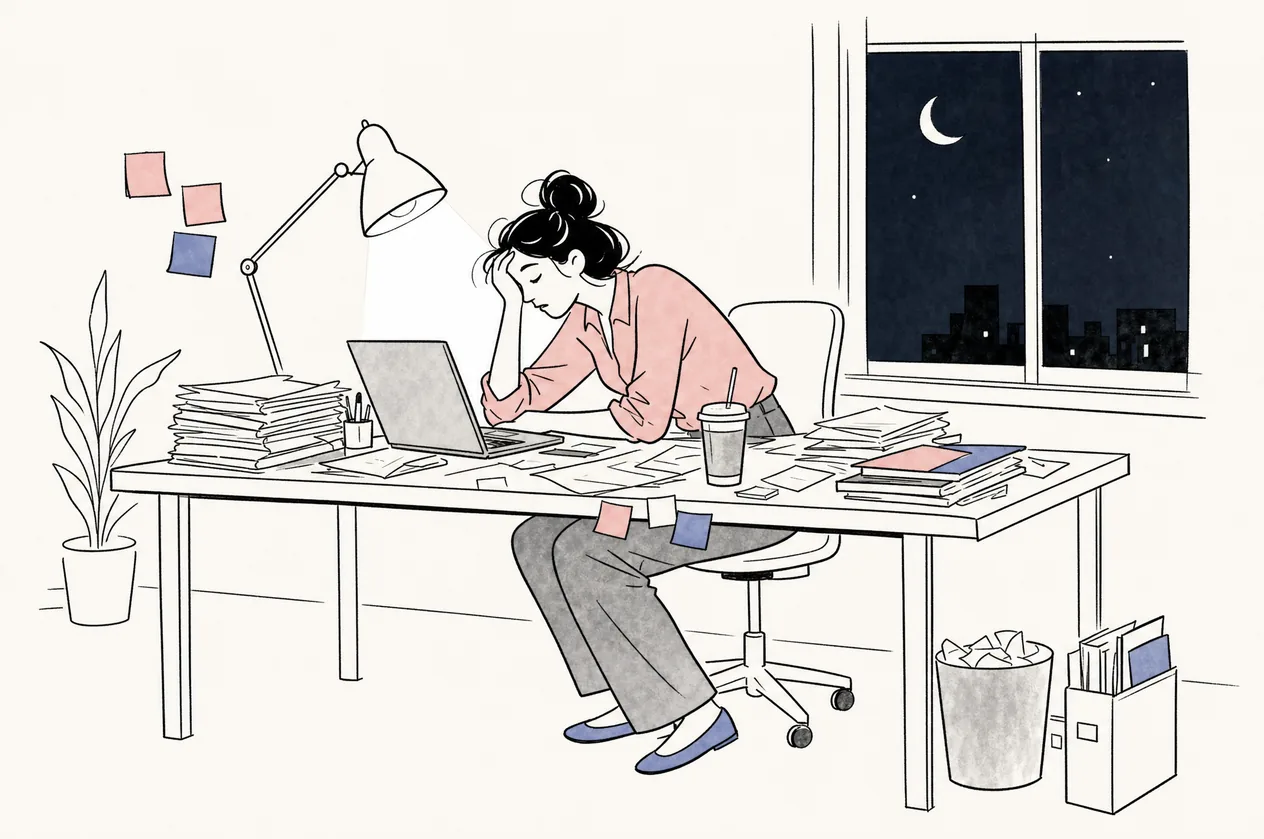
Key points
- WHO (ICD-11): burnout is an occupational phenomenon, not a medical diagnosis.
- Three signs: exhaustion, cynicism or detachment, reduced effectiveness.
- Burnout is linked to coronary heart disease, type 2 diabetes, insomnia, depression and pain.
- The causes lie mainly in work conditions: workload, control, reward, fairness, values and community.
What burnout is
In ICD-11, the WHO describes burnout as an occupational phenomenon resulting from chronic workplace stress that has not been successfully managed. It has three dimensions: feelings of energy depletion or exhaustion, increased mental distance from one’s job or cynicism, and reduced professional efficacy. Burnout is not classified as a medical condition.
Where it comes from
Christina Maslach and Michael Leiter describe six areas of work life that drive burnout: workload, control, reward, community, fairness and values (Maslach & Leiter, 2016). That means burnout is not just an individual problem.
Health effects
A systematic review of prospective studies linked burnout to physical consequences, including coronary heart disease, type 2 diabetes, high cholesterol, musculoskeletal pain and prolonged fatigue, as well as insomnia, depressive symptoms and use of psychotropic medications (Salvagioni et al., 2017).
What helps
For individuals
- Protect sleep, movement and time off.
- Set boundaries: working hours, notifications.
- Practice mindfulness or other stress-reduction methods (Goyal et al., 2014).
- Talk to your manager about workload and priorities.
For organizations
- Reasonable workloads and staffing.
- More control and flexibility.
- Recognition, fairness and supportive teams.
Caveat
Much of the evidence is observational, and definitions of burnout vary between studies.
Frequently asked questions
Is burnout the same as depression?
No, but they overlap. Burnout is tied to work; depression affects all areas of life. A doctor can help tell them apart.
Can I recover from burnout without quitting my job?
Often, yes, especially if workload and control can be adjusted. Sometimes a change of role or employer is needed.
Sources
- Maslach et al. (2016). Understanding the burnout experience: recent research and its implications for psychiatry. World Psychiatry 15(2):103-111. doi:10.1002/wps.20311
- Salvagioni et al. (2017). Physical, psychological and occupational consequences of job burnout: A systematic review of prospective studies. PLOS ONE 12(10):e0185781. doi:10.1371/journal.pone.0185781
- Goyal et al. (2014). Meditation Programs for Psychological Stress and Well-being. JAMA Internal Medicine 174(3):357. doi:10.1001/jamainternmed.2013.13018
- World Health Organization. Burn-out an "occupational phenomenon": International Classification of Diseases. www.who.int
Keep reading
 Stress
Mindfulness: what it is and how to start
What mindfulness is, what meta-analyses and a 2023 trial comparing MBSR with escitalopram found, and a 5-minute practice for beginners.
StressStress and your heart: how psychological strain affects cardiovascular health
How chronic stress raises heart attack risk according to INTERHEART, how work stress is linked to heart disease and the brain-inflammation pathway.
 Stress
Nature as medicine: how much time outdoors you need
What studies show about green spaces, cortisol and blood pressure, why 120 minutes a week in nature is a useful target and how to get your dose.
Stress tools
PHQ-9: depression screening questionnaire
9 questions about your mood over the past 2 weeks, one of the most widely used screening tools in the world.
QuizGAD-7: anxiety screening questionnaire
7 questions about anxiety over the past 2 weeks.
QuizWHO-5 Well-Being Index
5 statements about how you have been feeling over the past 2 weeks.
PDF · TrackerMonthly mood, energy and sleep tracker
Rate your mood, energy, anxiety and sleep daily on a 1–5 scale.
PDF · CardBreathing techniques card
Step-by-step instructions for cyclic sighing, slow breathing and box breathing.
PDF · CardProgressive muscle relaxation: step by step
A guide to 9 muscle groups to practice before bed.