Snoring and sleep apnea: when it is dangerous
Sleep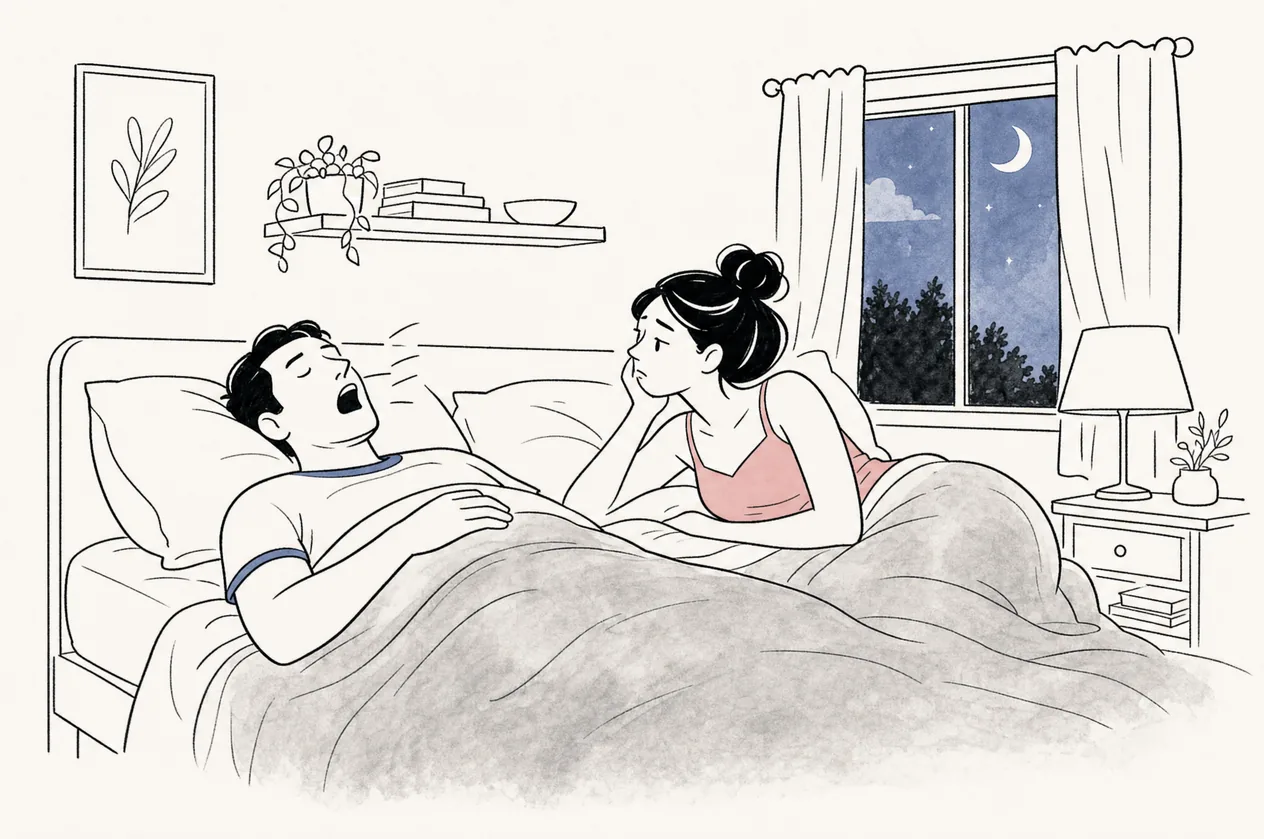
Key points
- A 2019 estimate: about 936 million adults aged 30 to 69 have sleep apnea, 425 million moderate to severe.
- STOP signs: Snoring, Tiredness, Observed pauses in breathing, high blood Pressure.
- Risk is higher in men, with age and with excess weight.
- Sleep apnea is treatable: CPAP, weight loss, positional therapy, oral appliances.
What happens during apnea
During sleep, throat muscles relax. In obstructive sleep apnea, the airway repeatedly narrows or closes, breathing stops for 10 seconds or more, oxygen levels fall and the brain briefly wakes the person to restart breathing. This can happen dozens of times an hour without the person remembering it.
How common it is
A 2019 analysis estimated that about 936 million adults aged 30 to 69 worldwide have obstructive sleep apnea, and 425 million have moderate to severe disease. The United States has one of the highest numbers of cases (Benjafield et al., 2019).
A U.S. cohort study found that the prevalence of moderate to severe sleep apnea had risen substantially over two decades, largely because of rising obesity (Peppard et al., 2013).
The STOP screening questions
The STOP questionnaire was developed for screening (Chung et al., 2008):
- Snoring: do you snore loudly?
- Tired: do you often feel tired or sleepy during the day?
- Observed: has anyone seen you stop breathing during sleep?
- Pressure: do you have high blood pressure?
Two or more “yes” answers suggest a higher risk; discuss them with your doctor.
Why it matters
Untreated sleep apnea is linked to high blood pressure, heart disease, stroke, atrial fibrillation, type 2 diabetes and car crashes caused by drowsiness.
What helps
- CPAP, a device that keeps the airway open with air pressure, is the standard treatment for moderate to severe apnea.
- Weight loss can substantially reduce apnea severity.
- Sleeping on your side helps if apnea is worse on your back.
- Oral appliances made by a dentist can help mild to moderate apnea.
- Avoid alcohol and sedatives before bed.
Frequently asked questions
Is all snoring sleep apnea?
No. Many people snore without apnea. But loud snoring with pauses, gasping and daytime sleepiness should be checked.
How is sleep apnea diagnosed?
With a sleep study, either overnight in a sleep lab or with a home sleep apnea test that your doctor orders.
Sources
- Benjafield et al. (2019). Estimation of the global prevalence and burden of obstructive sleep apnoea: a literature-based analysis. The Lancet Respiratory Medicine 7(8):687-698. doi:10.1016/S2213-2600(19)30198-5
- Peppard et al. (2013). Increased Prevalence of Sleep-Disordered Breathing in Adults. American Journal of Epidemiology 177(9):1006-1014. doi:10.1093/aje/kws342
- Chung et al. (2008). STOP Questionnaire. Anesthesiology 108(5):812-821. doi:10.1097/ALN.0b013e31816d83e4
Keep reading
 Sleep
Napping: how long to nap for real benefits
Why a 10- to 20-minute nap boosts alertness without grogginess, what experiments show about nap length and the best time of day to nap.
 Sleep
Alcohol and sleep: why a nightcap keeps you from resting well
Why alcohol helps you fall asleep but disrupts the second half of the night, what studies show about REM sleep and recovery, and better ways to unwind.
 Sleep
Insomnia: what CBT-I is and why it is first-line treatment
What cognitive behavioral therapy for insomnia involves, why U.S. and European guidelines recommend it before sleeping pills and where to find it.
Sleep tools
How much sleep do you need? Recommendations by age
Recommendations from the American Academy of Sleep Medicine and the National Sleep Foundation.
QuizSocial jet lag calculator
The difference in your sleep midpoint between workdays and days off.
QuizWhen should you stop drinking coffee? Calculator
According to a meta-analysis, have a regular coffee at least about 8.8 hours before bed.
PDF · DiaryTwo-week sleep diary
Record bedtime, wake time, awakenings, caffeine, alcohol and how you feel.
PDF · TrackerMonthly 24-hour sleep tracker
A visual sleep rhythm tracker that shows your schedule and social jet lag.
PDF · ChecklistBedtime routine checklist
A step-by-step wind-down routine with a weekly tracker.