Music and stress: what meta-analyses show
Stress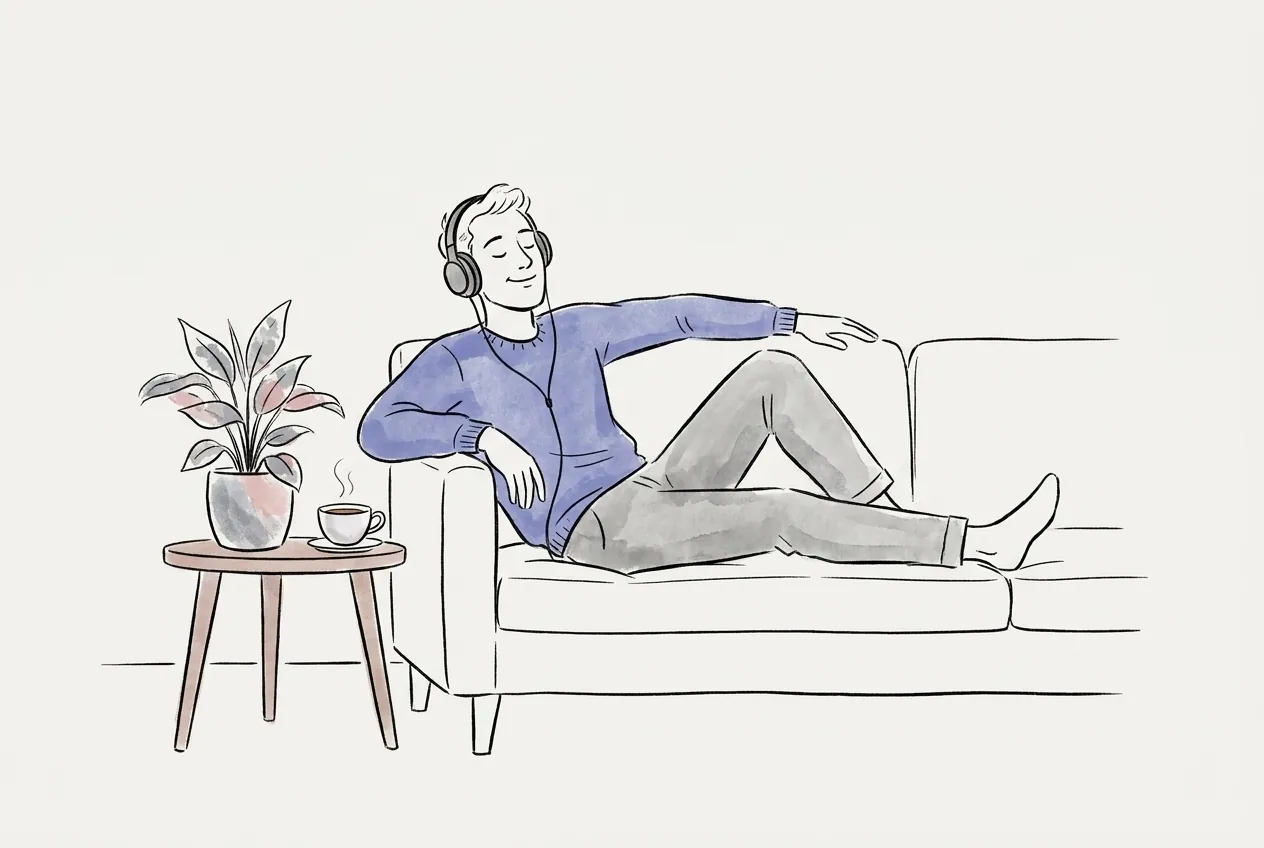
Key points
- Meta-analysis: music reduces psychological stress with a moderate effect.
- Physiological markers (heart rate, blood pressure, cortisol) improve somewhat less.
- The effect was seen for both listening and making music.
- Music you choose yourself tends to work best.
What the research shows
A meta-analysis of 104 randomized controlled trials found that music interventions had a medium-to-large effect on psychological stress-related outcomes and a small-to-medium effect on physiological markers such as heart rate, blood pressure and stress hormones. Benefits appeared for both listening to music and active music-making (de Witte et al., 2022).
Breathing practices also reduce stress (Fincham et al., 2023), and group activities such as choirs build social connection, which is linked to longevity (Holt-Lunstad et al., 2010).
How to use music
- Make a “calm” playlist for stressful moments.
- Listen for 15 to 20 minutes while lying down or taking a walk.
- Combine music with slow breathing.
- Try singing, playing an instrument or joining a choir.
Frequently asked questions
What kind of music is best for stress?
Slower music without lyrics is often used in studies, but personal preference matters most.
Does singing help?
Making music, including singing in a group, showed benefits too, and group singing adds social connection.
Sources
- de Witte et al. (2020). Effects of music interventions on stress-related outcomes: a systematic review and two meta-analyses. Health Psychology Review 14(2):294-324. doi:10.1080/17437199.2019.1627897
- Fincham et al. (2023). Effect of breathwork on stress and mental health: A meta-analysis of randomised-controlled trials. Scientific Reports 13(1). doi:10.1038/s41598-022-27247-y
- Holt-Lunstad et al. (2010). Social Relationships and Mortality Risk: A Meta-analytic Review. PLoS Medicine 7(7):e1000316. doi:10.1371/journal.pmed.1000316
Keep reading
 Stress
Expressive writing: how writing about your feelings helps
What James Pennebaker’s expressive writing method involves, what a meta-analysis of 146 studies found and how to try it safely.
StressOptimism and health: what studies show
What a meta-analysis of 15 studies with 229,000 people found about optimism, heart disease and mortality, and how optimism can be practiced.
StressProgressive muscle relaxation: a simple technique for anxiety
What progressive muscle relaxation is, what a meta-analysis found about relaxation training for anxiety and a step-by-step 10- to 15-minute routine.
Related topics from other pillars
 Social Connection · Guide
Social connection and health: why relationships are a pillar of health
How relationships, support and community are linked to longevity and heart health, what meta-analyses show and where to start.
 Social Connection
Loneliness as a health risk: what you should know
How loneliness and social isolation are linked to mortality, heart disease and stroke, who is most at risk and what helps.
 Social Connection
Volunteering and health: how helping others affects you
What systematic reviews and meta-analyses show about volunteering, depression, life satisfaction and mortality, and how to start without burning out.
Stress tools
PHQ-9: depression screening questionnaire
9 questions about your mood over the past 2 weeks, one of the most widely used screening tools in the world.
QuizGAD-7: anxiety screening questionnaire
7 questions about anxiety over the past 2 weeks.
QuizWHO-5 Well-Being Index
5 statements about how you have been feeling over the past 2 weeks.
PDF · TrackerMonthly mood, energy and sleep tracker
Rate your mood, energy, anxiety and sleep daily on a 1–5 scale.
PDF · CardBreathing techniques card
Step-by-step instructions for cyclic sighing, slow breathing and box breathing.
PDF · CardProgressive muscle relaxation: step by step
A guide to 9 muscle groups to practice before bed.