Extreme heat and health: how to avoid overheating
Physical Activity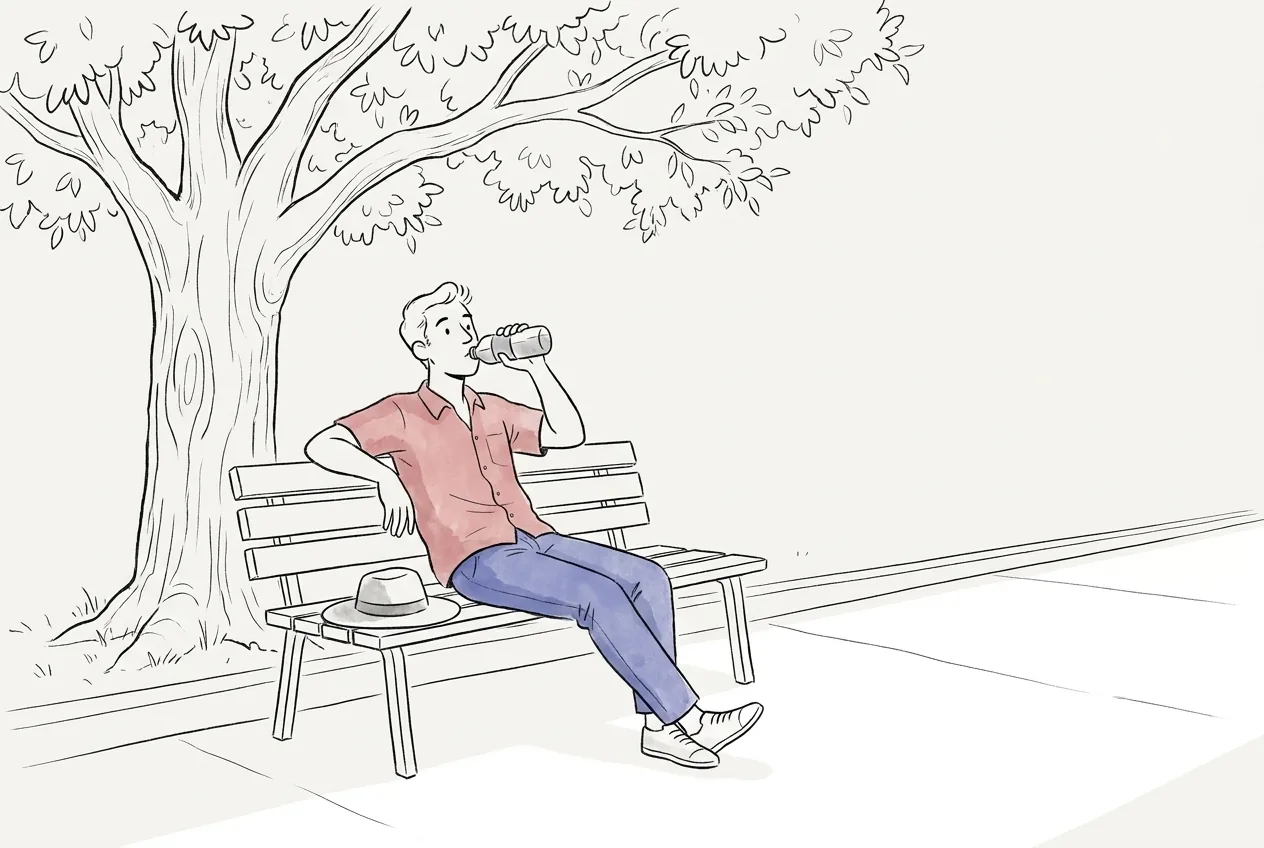
Key points
- Older adults, people with heart or kidney disease or diabetes, and outdoor workers are hit hardest by heat.
- Heat stroke is an emergency: very high body temperature, confusion, hot skin.
- Wetting the skin while using a fan is a simple, low-cost way to cool down.
- Some medicines (diuretics, some blood pressure and psychiatric drugs) raise the risk of overheating.
- Move workouts to the morning or evening and shorten them during heat.
Why heat is dangerous beyond heat stroke
In hot weather the body cools itself by sweating and widening blood vessels in the skin. That puts extra strain on the heart, and the loss of fluid and salt strains the kidneys. During heat waves, emergency visits and deaths rise not only from heat stroke but also from heart, kidney and lung disease (Ebi et al., 2021). Heat is the leading weather-related cause of death in the United States.
A large multicountry study of more than 74 million deaths in 13 countries, including the U.S., found that a substantial share of deaths is linked to non-optimal temperatures. Cold accounts for more deaths overall, but extreme heat causes sharp spikes (Gasparrini et al., 2015).
Who is at risk
- adults over 65, especially those living alone;
- people with heart, kidney or lung disease, diabetes or obesity;
- infants, young children and pregnant women;
- people who work or exercise outdoors;
- people taking certain medications: diuretics, some blood pressure drugs, antidepressants and antipsychotics.
Signs of overheating
Heat exhaustion: heavy sweating, weakness, dizziness, nausea, headache, muscle cramps. Move to a cool place, drink water and wet your skin.
Heat stroke: very high body temperature (103°F or higher), confusion, slurred speech, hot skin, fainting. This is an emergency: call 911 and cool the person until help arrives.
What really cools you down
A review in The Lancet looked at personal cooling strategies (Jay et al., 2021):
- Air conditioning or a cool space. A few hours a day in a cooler place reduces strain. Many cities open cooling centers.
- Wetting your skin. Water evaporating from the skin is cheap and effective, especially with a fan.
- Fans. Helpful in moderate heat; not enough on their own in extreme heat.
- Cool showers, a wet towel around the neck, light loose clothing.
- Shade. Close blinds on sunny windows during the day and ventilate at night.
Exercising in the heat
- Move walks and workouts to early morning or evening.
- Reduce duration and intensity during the first hot days; it takes 1 to 2 weeks to acclimatize.
- Carry water and take breaks in the shade.
- Stop if you feel dizzy, nauseated or develop a strong headache.
Check on others
During a heat wave, call older relatives and neighbors who live alone. Ask whether they have water, whether their home is cool and how they are feeling.
Frequently asked questions
How much should I drink in the heat?
Let thirst and urine color guide you: pale yellow usually means you are drinking enough. Older adults should drink on a schedule because thirst weakens with age. If your doctor limits your fluids, follow their advice.
Do fans help?
In moderate heat, yes, especially if you wet your skin. In extreme heat a fan alone will not cool you enough; find an air-conditioned space such as a cooling center or library.
Can I exercise in hot weather?
Yes, but shorter, slower and in the cooler hours, with water nearby. Stop if you feel dizzy, nauseated or have a bad headache.
Sources
- Ebi et al. (2021). Hot weather and heat extremes: health risks. The Lancet 398(10301):698-708. doi:10.1016/S0140-6736(21)01208-3
- Jay et al. (2021). Reducing the health effects of hot weather and heat extremes: from personal cooling strategies to green cities. The Lancet 398(10301):709-724. doi:10.1016/S0140-6736(21)01209-5
- Gasparrini et al. (2015). Mortality risk attributable to high and low ambient temperature: a multicountry observational study. The Lancet 386(9991):369-375. doi:10.1016/S0140-6736(14)62114-0
- Centers for Disease Control and Prevention. Heat and Health. www.cdc.gov
Keep reading
 Physical Activity
Strong bones: exercises to prevent osteoporosis
What the LIFTMOR trial showed about high-intensity strength and impact training for bone density, why balance exercises prevent falls and how to start safely.
Physical Activity · Myth or factMyth or fact: ab exercises burn belly fat
Can you "spot reduce" fat in one area? What a randomized trial of ab exercises found and what actually reduces abdominal fat.
Physical Activity"Weekend warriors": is exercising only on weekends good for you?
What a study of more than 63,000 adults found about getting all your weekly exercise in one or two sessions, and why sitting still matters.
Related topics from other pillars
Cold weather and power outages: getting through winter together
Why older and isolated people are at greatest risk during winter storms and outages, how to plan with neighbors and family and what never to use for heat.
 Sleep
Sleeping in the heat: how to rest on hot nights
Why hot nights shorten sleep, who is affected most and what helps: ventilation, a cool shower, light bedding and fans.
SleepSleeping in a cold home during a winter power outage
How to stay warm at night without heat and avoid danger: layers, sleeping bags, hot water bottles and why generators and stoves must never be used indoors.
Physical Activity tools
IPAQ: International Physical Activity Questionnaire (short)
Calculates your MET-minutes per week and your activity level.
QuizDo you meet the Physical Activity Guidelines? Check
Minutes of moderate and vigorous activity per week, plus strength training.
Quiz30-second chair stand test (for adults 60+)
How many times can you stand up from a chair in 30 seconds? Compared with CDC norms.
PDF · TrackerMonthly step tracker
Write down your daily steps and track your progress.
PDF · Log15-minute home strength workout + training log
A no-equipment routine with an 8-week rep log.
PDF · Card + trackerBalance exercises for adults 60+
A safe balance and leg-strength routine with a 4-week tracker.