Sleeping in the heat: how to rest on hot nights
Sleep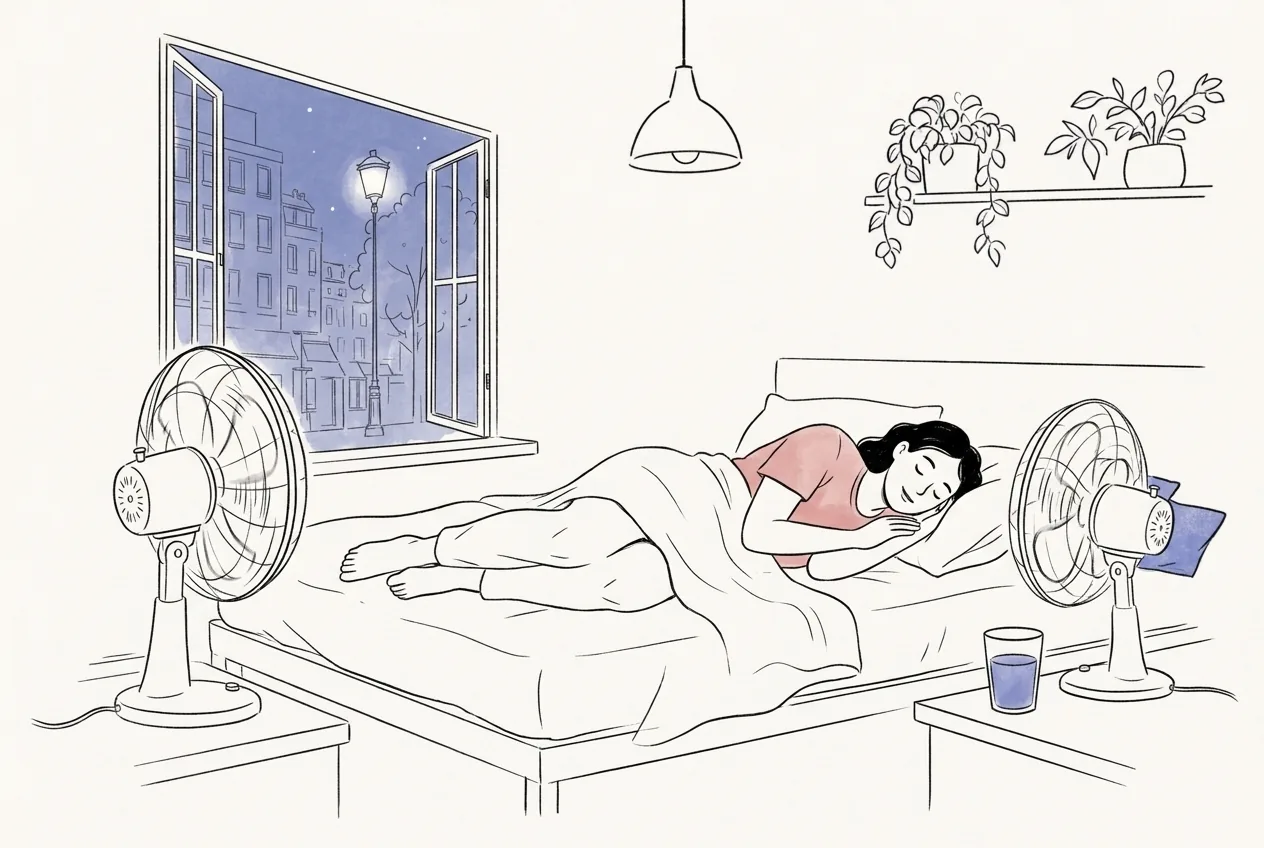
Key points
- High nighttime temperatures shorten sleep, mainly by delaying sleep onset.
- Heat reduces deep and REM sleep, and humidity makes it worse.
- Older adults and women lose more sleep on hot nights.
- Ventilate at night and block the sun during the day.
- A cool (not cold) shower and light cotton bedding help.
What the research shows
Researchers analyzed more than 7 million sleep records from the wristbands of more than 47,000 adults in 68 countries. On warmer nights, people slept less, mainly because they fell asleep later. The effect was stronger in older adults, women and people in lower-income countries. The authors estimated that excess heat already costs the average person about 44 hours of sleep a year (Minor et al., 2022).
Why heat interferes with sleep
To fall asleep, core body temperature needs to drop slightly. In a hot room, the body struggles to shed heat. A review found that heat increases awakenings and reduces deep and REM sleep, and high humidity makes this worse (Okamoto-Mizuno & Mizuno, 2012).
What helps
Cool the bedroom
- Use air conditioning if you have it, even set a few degrees higher to save energy.
- Close blinds on the sunny side during the day.
- Ventilate in the evening and at night when it is cooler outside.
- A fan increases heat loss, especially if your skin is slightly damp (Jay et al., 2021).
Prepare your body
- A cool or lukewarm shower an hour before bed.
- Light sleepwear, cotton or linen sheets, a thin sheet instead of a comforter.
- Drink water during the day, but not too much right before bed.
Keep your routine
- Go to bed and get up at about the same time.
- Avoid heavy meals and alcohol in the evening.
- If you cannot sleep after 20 minutes, get up and do something calm in dim light.
Who should take extra care
For older adults and people with heart, kidney or lung disease or diabetes, hot nights are especially hard because the body gets no relief from daytime heat. Make sure their bedroom is cool and check on how they are doing.
Frequently asked questions
What is the best bedroom temperature?
Most people sleep best in a cool room. On hot nights, the goal is to lower the temperature as much as possible with air conditioning, ventilation and shade.
Is it OK to sleep with a fan on?
Yes. Avoid pointing it directly at your face all night and watch for dryness.
Should I take a sleeping pill in the heat?
Sleeping pills do not fix the cause and can impair temperature regulation. Cool the bedroom and adjust your routine first.
Sources
- Minor et al. (2022). Rising temperatures erode human sleep globally. One Earth 5(5):534-549. doi:10.1016/j.oneear.2022.04.008
- Okamoto-Mizuno et al. (2012). Effects of thermal environment on sleep and circadian rhythm. Journal of Physiological Anthropology 31(1). doi:10.1186/1880-6805-31-14
- Jay et al. (2021). Reducing the health effects of hot weather and heat extremes: from personal cooling strategies to green cities. The Lancet 398(10301):709-724. doi:10.1016/S0140-6736(21)01209-5
Keep reading
Sleeping in a cold home during a winter power outage
How to stay warm at night without heat and avoid danger: layers, sleeping bags, hot water bottles and why generators and stoves must never be used indoors.
 Sleep
Helping children sleep after frightening events and emergencies
How to help a child sleep after a disaster, emergency or scary news, what to do about nightmares, why a bedtime routine matters and when to get professional help.
SleepDrowsy driving: more dangerous than you think
How sleepiness raises the risk of serious crashes, what a case-control study found about short sleep and driving at night, and what to do when you feel drowsy.
Related topics from other pillars
Sleep tools
How much sleep do you need? Recommendations by age
Recommendations from the American Academy of Sleep Medicine and the National Sleep Foundation.
QuizSocial jet lag calculator
The difference in your sleep midpoint between workdays and days off.
QuizWhen should you stop drinking coffee? Calculator
According to a meta-analysis, have a regular coffee at least about 8.8 hours before bed.
PDF · DiaryTwo-week sleep diary
Record bedtime, wake time, awakenings, caffeine, alcohol and how you feel.
PDF · TrackerMonthly 24-hour sleep tracker
A visual sleep rhythm tracker that shows your schedule and social jet lag.
PDF · ChecklistBedtime routine checklist
A step-by-step wind-down routine with a weekly tracker.