Light and your body clock: how to reset your sleep schedule
Sleep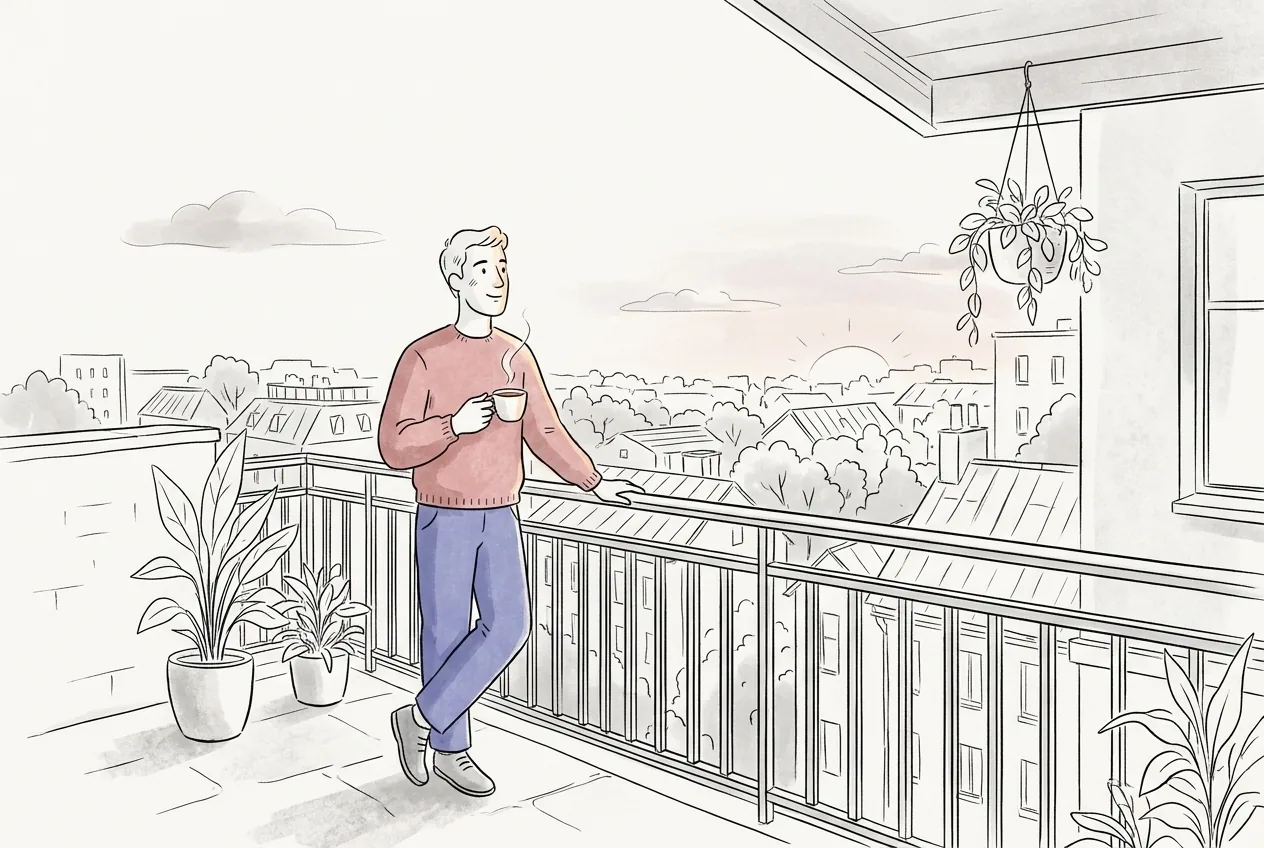
Key points
- Morning light shifts the clock earlier; evening light shifts it later.
- A week of natural light shifted the body clock about 2 hours earlier.
- Reading on a screen in the evening delayed sleep and suppressed melatonin.
- The simplest step: 15 to 30 minutes of daylight in the morning.
Light runs the clock
A small cluster of cells in the brain, the suprachiasmatic nucleus, acts as the master clock and takes its cues mainly from light entering the eyes. Light in the morning shifts the clock earlier; light in the late evening shifts it later and suppresses melatonin.
What the research shows
Camping. In a University of Colorado study, participants spent a week camping with only sunlight and campfires. Their melatonin rhythm shifted about 2 hours earlier, bringing their internal clocks into line with sunrise and sunset (Wright et al., 2013).
E-readers. In a Harvard study, reading on a light-emitting e-reader for 4 hours before bed, compared with a printed book, delayed sleep onset, suppressed and delayed melatonin, reduced REM sleep and left people less alert the next morning (Chang et al., 2015).
Guidance for sleeping well under stress also stresses daylight exposure and regular routines (Altena et al., 2020).
How to use light
- Get outside within an hour of waking for 15 to 30 minutes.
- Work near a window during the day.
- Dim lights in the evening and use warm-colored bulbs.
- Put screens away 30 to 60 minutes before bed.
- Keep your bedroom dark at night.
Frequently asked questions
Does night mode on my phone help?
It reduces blue light somewhat, but brightness and the stimulating content still matter. Dimming screens and stopping use before bed helps more.
Does cloudy daylight still work?
Yes. Outdoor light on a cloudy day is still much brighter than typical indoor lighting.
Sources
- Wright et al. (2013). Entrainment of the Human Circadian Clock to the Natural Light-Dark Cycle. Current Biology 23(16):1554-1558. doi:10.1016/j.cub.2013.06.039
- Chang et al. (2015). Evening use of light-emitting eReaders negatively affects sleep, circadian timing, and next-morning alertness. Proceedings of the National Academy of Sciences 112(4):1232-1237. doi:10.1073/pnas.1418490112
- Altena et al. (2020). Dealing with sleep problems during home confinement due to the COVID‐19 outbreak: Practical recommendations from a task force of the European CBT‐I Academy. Journal of Sleep Research 29(4). doi:10.1111/jsr.13052
Keep reading
Sleep and memory: how the brain locks in learning overnight
How deep sleep and REM sleep help consolidate memories and skills, what naps add and why all-nighters before exams backfire.
 Sleep
How sleep changes with age and what to do about it
How deep sleep and nighttime awakenings change across the lifespan, how much sleep older adults need and why sleeping pills are risky after 65.
 Sleep
Night shifts: how to protect your health on shift work
How night and shift work are linked to accidents, diabetes, weight gain and heart disease, and practical tips for sleep, light and meals.
Sleep tools
How much sleep do you need? Recommendations by age
Recommendations from the American Academy of Sleep Medicine and the National Sleep Foundation.
QuizSocial jet lag calculator
The difference in your sleep midpoint between workdays and days off.
QuizWhen should you stop drinking coffee? Calculator
According to a meta-analysis, have a regular coffee at least about 8.8 hours before bed.
PDF · DiaryTwo-week sleep diary
Record bedtime, wake time, awakenings, caffeine, alcohol and how you feel.
PDF · TrackerMonthly 24-hour sleep tracker
A visual sleep rhythm tracker that shows your schedule and social jet lag.
PDF · ChecklistBedtime routine checklist
A step-by-step wind-down routine with a weekly tracker.