News and anxiety: how to stay informed without burning out
Stress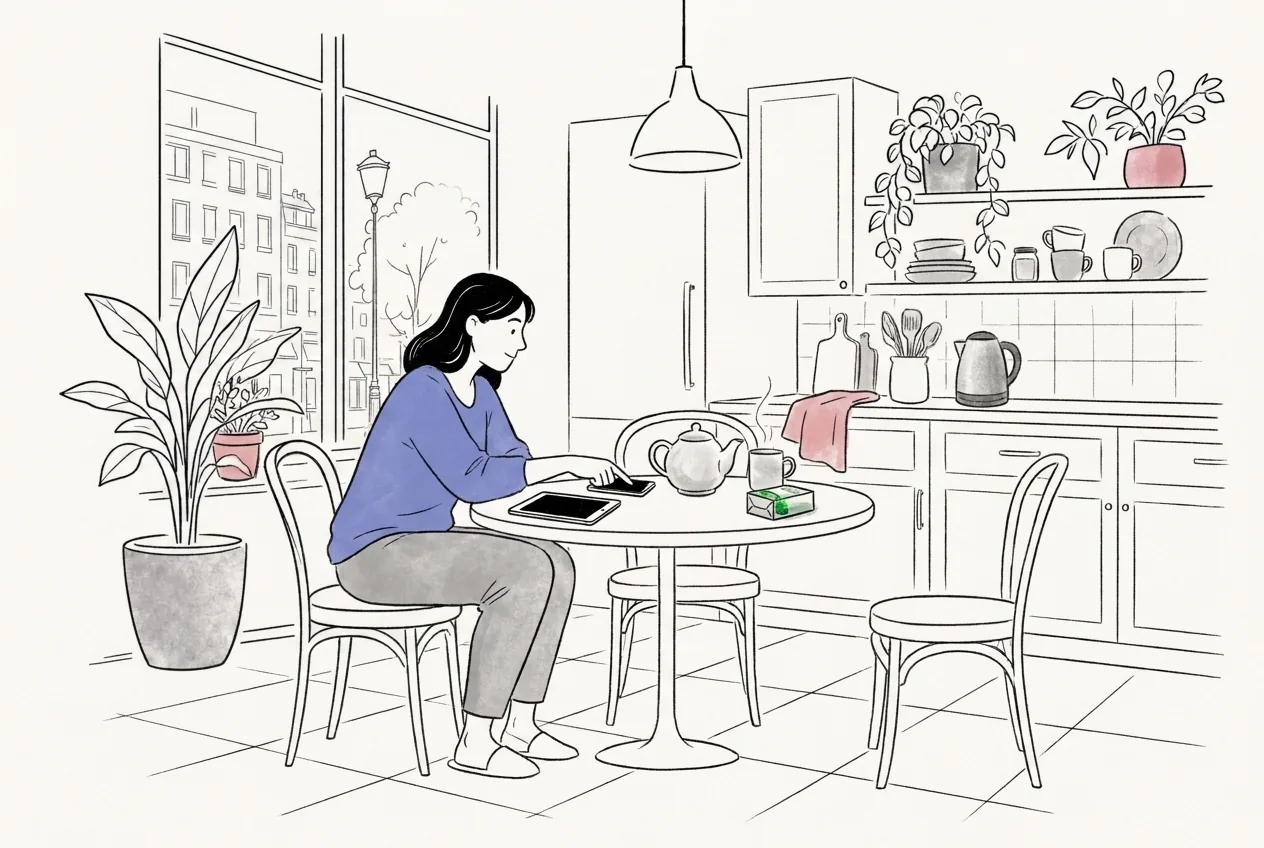
Key points
- Hours of news about traumatic events is linked to higher stress.
- Repeated graphic videos and images are especially draining.
- Structure helps: one or two news "windows" a day and trusted sources.
- The goal is not to avoid information completely but to control the dose.
Why news wears us down
The 24-hour news cycle and social media feeds deliver a constant stream of distressing events. The brain reacts to threatening images as if the danger were close.
What the research shows
The Boston Marathon bombing. In a national U.S. study, people who consumed 6 or more hours of media coverage of the 2013 bombings each day in the week afterward reported more acute stress than people who were directly exposed at the scene (Holman et al., 2014).
COVID-19. Researchers warned early in the pandemic that repeated media exposure to the outbreak could amplify anxiety and stress responses and lead to misplaced health behaviors (Garfin et al., 2020).
Rules of information hygiene
- Choose one or two set times a day to check the news.
- Use a few trusted sources rather than endless feeds.
- Turn off push notifications.
- Avoid repeated graphic videos.
- No news in the hour before bed.
- Ask yourself: is this information useful for my decisions today?
What to do instead of endless scrolling
- A short walk or call with a friend.
- Slow breathing or mindfulness; meditation programs modestly reduce anxiety (Goyal et al., 2014).
- Action: donate, volunteer, help a neighbor.
Limits of the evidence
Most studies are observational: anxious people may also watch more news. Still, the link between heavy exposure and stress is consistent.
Frequently asked questions
Is doomscrolling harmful?
Endless scrolling through negative news is linked to more anxiety and worse mood. Set limits and turn off alerts.
How much news is OK?
There is no exact number. Many experts suggest checking a couple of times a day from reliable sources rather than constantly.
Sources
- Holman et al. (2014). Media’s role in broadcasting acute stress following the Boston Marathon bombings. Proceedings of the National Academy of Sciences 111(1):93-98. doi:10.1073/pnas.1316265110
- Garfin et al. (2020). The novel coronavirus (COVID-2019) outbreak: Amplification of public health consequences by media exposure.. Health Psychology 39(5):355-357. doi:10.1037/hea0000875
- Goyal et al. (2014). Meditation Programs for Psychological Stress and Well-being. JAMA Internal Medicine 174(3):357. doi:10.1001/jamainternmed.2013.13018
- World Health Organization. Doing What Matters in Times of Stress. www.who.int
Keep reading
 Stress
Breathing exercises for stress: what works according to research
What a meta-analysis of breathwork trials found, how slow breathing and cyclic sighing affect mood, and three simple techniques to try.
 Stress
Nature as medicine: how much time outdoors you need
What studies show about green spaces, cortisol and blood pressure, why 120 minutes a week in nature is a useful target and how to get your dose.
 Stress · Guide
Stress and health: how tension affects the body and what helps
What happens in the body during stress, why chronic stress is harmful and which stress-management methods have scientific evidence behind them.
Stress tools
PHQ-9: depression screening questionnaire
9 questions about your mood over the past 2 weeks, one of the most widely used screening tools in the world.
QuizGAD-7: anxiety screening questionnaire
7 questions about anxiety over the past 2 weeks.
QuizWHO-5 Well-Being Index
5 statements about how you have been feeling over the past 2 weeks.
PDF · TrackerMonthly mood, energy and sleep tracker
Rate your mood, energy, anxiety and sleep daily on a 1–5 scale.
PDF · CardBreathing techniques card
Step-by-step instructions for cyclic sighing, slow breathing and box breathing.
PDF · CardProgressive muscle relaxation: step by step
A guide to 9 muscle groups to practice before bed.