Social media and in-person connection: can online replace real relationships?
Social ConnectionKey points
- The heaviest social media users had about twice the odds of perceived isolation.
- Limiting social media to 30 minutes a day for 3 weeks reduced loneliness.
- After deactivating Facebook, people spent more time with friends and family.
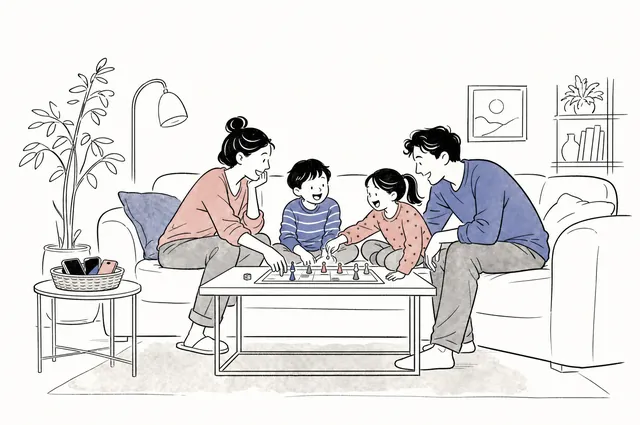
- Online connection helps when it complements, not replaces, in-person time.
More connection, less closeness?
Social media lets us keep in touch with more people than ever, yet loneliness has risen, especially among young adults.
What the research shows
Perceived isolation. In a nationally representative survey of U.S. adults aged 19 to 32, those in the highest quartile of social media use had about twice the odds of perceived social isolation as those in the lowest (Primack et al., 2017).
Limiting use. In a randomized trial, students who limited Facebook, Instagram and Snapchat to 10 minutes each per day for 3 weeks reported less loneliness and depression (Hunt et al., 2018).
Deactivating Facebook. In a large U.S. experiment, people who deactivated Facebook for 4 weeks spent more time offline, including with friends and family, and reported higher well-being (Allcott et al., 2020).
How to balance online and offline
- Use social media to arrange in-person time.
- Prefer direct messages and video calls over scrolling.
- Keep phones away during meals and get-togethers.
- Notice how you feel after using apps and adjust.
Caveat
The survey data are cross-sectional: lonely people may use social media more. The experiments support a causal effect, though they are short.
Frequently asked questions
Is all social media use harmful?
No. Messaging friends and joining supportive groups can help. Passive scrolling and comparison are more linked to worse mood.
How can I use social media more healthily?
Set time limits, unfollow accounts that make you feel bad and use it to plan in-person meetups.
Sources
- Primack et al. (2017). Social Media Use and Perceived Social Isolation Among Young Adults in the U.S.. American Journal of Preventive Medicine 53(1):1-8. doi:10.1016/j.amepre.2017.01.010
- Hunt et al. (2018). No More FOMO: Limiting Social Media Decreases Loneliness and Depression. Journal of Social and Clinical Psychology 37(10):751-768. doi:10.1521/jscp.2018.37.10.751
- Allcott et al. (2020). The Welfare Effects of Social Media. American Economic Review 110(3):629-676. doi:10.1257/aer.20190658
Keep reading
 Social Connection
Blue Zones: lessons from the world’s longevity hotspots
What the five Blue Zones, including Loma Linda, California, have in common, what Adventist Health Studies confirm and why some longevity claims are criticized.
 Social Connection
Friendship in adulthood: how many hours it takes to make a friend
What research shows about the hours it takes to turn an acquaintance into a close friend, why friendship matters for health and how to build it.
 Social Connection
How to support someone in crisis: five principles of psychological first aid
The five evidence-informed principles for supporting people after traumatic events, how to talk to someone in crisis and why asking about suicide does not increase risk.
Related topics from other pillars
 Risky Substances
Smartphones and social media: when a habit becomes an addiction
How common problematic smartphone use is, how it is linked to anxiety, depression and sleep, and what experiments found when people limited social media.
Risky SubstancesGaming disorder: when video games become a problem
How common gaming disorder is, the WHO criteria in ICD-11, warning signs to watch for in teens and adults, and how it is treated.
Social Connection tools
Three-item loneliness scale (UCLA-3)
Three questions used in major U.S. studies of loneliness.
QuizDe Jong Gierveld loneliness scale (6 items)
Measures emotional and social loneliness.
QuizOslo Social Support Scale (OSSS-3)
Three questions about who you can count on.
PDF · WorksheetMy connections map
A worksheet for mapping your social network and planning contact.
PDF · Tracker"One get-together a week" tracker
A monthly tracker of social contact.
PDF · CardsFamily dinner conversation cards
24 questions for phone-free conversation at the table.