Exercise after 60: strength, balance and fall prevention
Physical Activity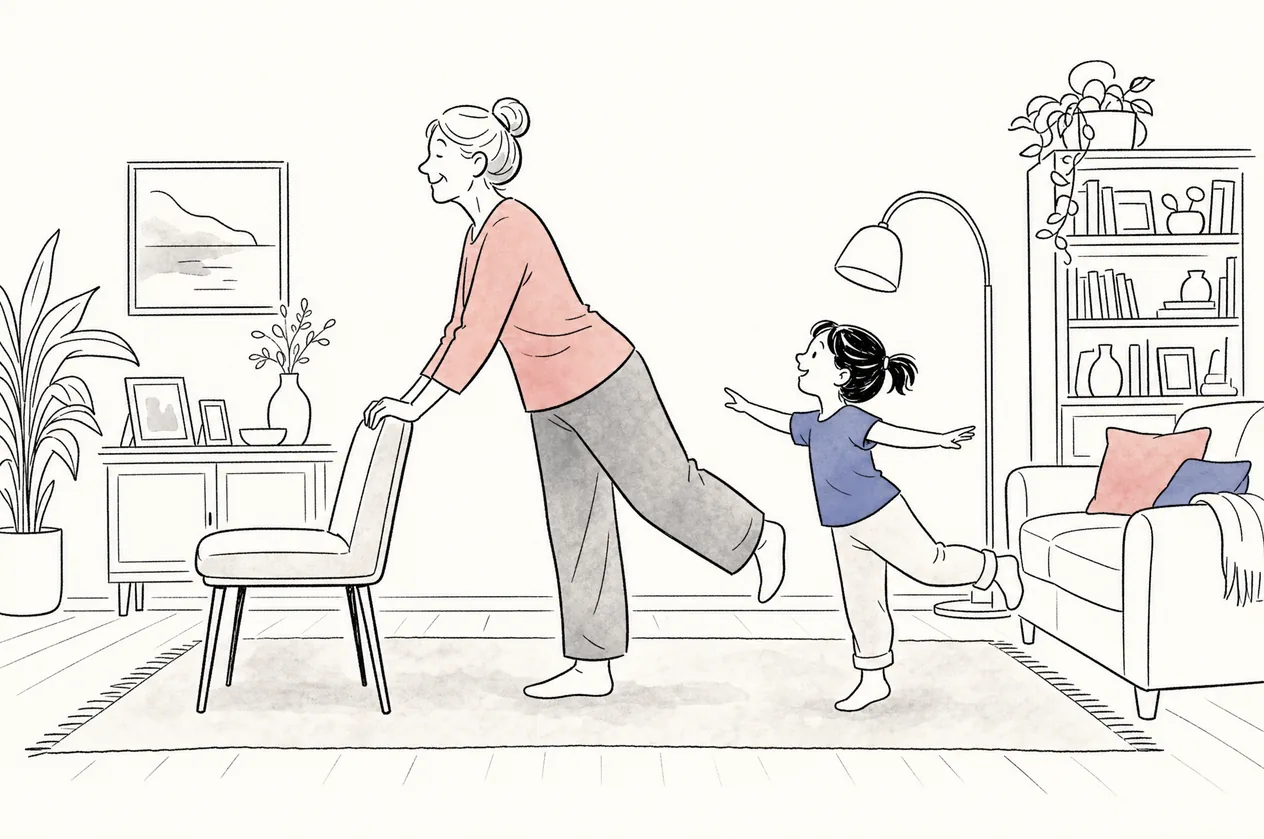
Key points
- Adults 65+: 150 to 300 minutes of moderate activity plus balance and strength training on 3 or more days a week.
- Exercise lowers the rate of falls by about 23% on average.
- Balance plus functional exercise: 24% fewer falls; several types together: 34% fewer.
- It is never too late: benefits are seen even in people over 80.
Why movement matters even more after 60
Every year, about one in four U.S. adults aged 65 and older falls, and falls are the leading cause of injury among older adults, according to the CDC. Muscle strength, balance and bone density decline with age, but all of them respond to training.
What the guidelines recommend
For adults 65 and older, the WHO and the Physical Activity Guidelines for Americans recommend 150 to 300 minutes of moderate aerobic activity a week, muscle strengthening at least 2 days a week, and multicomponent activity that emphasizes balance and strength on 3 or more days a week (Bull et al., 2020).
What the research shows
A Cochrane review of 108 randomized trials with more than 23,000 older adults living in the community found that exercise reduced the rate of falls by about 23%. Balance and functional exercises reduced falls by 24%, and programs combining several types (usually balance plus strength) by 34% (Sherrington et al., 2019).
Muscle-strengthening activities are also linked to lower risk of death, heart disease, diabetes and cancer (Momma et al., 2022).
A safe home routine
Hold on to a sturdy chair or counter as needed:
- Sit-to-stand: stand up from a chair without using your hands, 10 times.
- Heel raises: rise onto your toes, 10 to 15 times.
- Single-leg stand: 10 to 30 seconds on each leg.
- Heel-to-toe walk: 10 steps along a counter.
- Wall push-ups: 10 times.
- Side leg raises: 10 times each side.
Tips
- Tai chi classes have good evidence for balance.
- Remove trip hazards at home and use night lights.
- Have your vision and medications reviewed yearly.
Frequently asked questions
Is it safe to start exercising at 75 or 80?
Yes, for most people. Start gently, ideally with a physical therapist or a class designed for older adults, and progress slowly.
Does Medicare cover exercise programs?
Many Medicare Advantage plans include fitness benefits such as SilverSneakers, and physical therapy for balance problems is covered with a referral.
Sources
- Sherrington et al. (2019). Exercise for preventing falls in older people living in the community. Cochrane Database of Systematic Reviews 2019(1). doi:10.1002/14651858.CD012424.pub2
- Bull et al. (2020). World Health Organization 2020 guidelines on physical activity and sedentary behaviour. British Journal of Sports Medicine 54(24):1451-1462. doi:10.1136/bjsports-2020-102955
- Momma et al. (2022). Muscle-strengthening activities are associated with lower risk and mortality in major non-communicable diseases: a systematic review and meta-analysis of cohort studies. British Journal of Sports Medicine 56(13):755-763. doi:10.1136/bjsports-2021-105061
- Centers for Disease Control and Prevention. STEADI: Older Adult Fall Prevention. www.cdc.gov
Keep reading
 Physical Activity
Walking: the simplest exercise with proven benefits
What meta-analyses show about walking, heart disease and longevity, how fast and how much to walk and easy ways to walk more every day.
 Physical Activity
Exercise and mood: how physical activity helps with depression and anxiety
What reviews of meta-analyses show about exercise for depression, anxiety and distress, which types of exercise work best and how to start when you have no energy.
 Physical Activity
Strength training at home in 15 minutes: why and how
Why guidelines recommend muscle strengthening twice a week, what a meta-analysis found about strength training and longevity, and a 15-minute no-equipment routine.
Related topics from other pillars
Loneliness, hearing loss and dementia: what you can change
What the Lancet Commission found about 12 modifiable dementia risk factors, including social isolation and hearing loss, and practical steps to lower risk.
 Nutrition
Vitamin D: who really needs supplements?
What the VITAL trial and a meta-analysis of 81 randomized trials found about vitamin D supplements, and who may still need them.
 Stress
Tai chi: gentle movement for body and mind
What a BMJ randomized trial found about tai chi for fibromyalgia, how tai chi improves balance and cognition in older adults and how to get started.
Physical Activity tools
IPAQ: International Physical Activity Questionnaire (short)
Calculates your MET-minutes per week and your activity level.
QuizDo you meet the Physical Activity Guidelines? Check
Minutes of moderate and vigorous activity per week, plus strength training.
Quiz30-second chair stand test (for adults 60+)
How many times can you stand up from a chair in 30 seconds? Compared with CDC norms.
PDF · TrackerMonthly step tracker
Write down your daily steps and track your progress.
PDF · Log15-minute home strength workout + training log
A no-equipment routine with an 8-week rep log.
PDF · Card + trackerBalance exercises for adults 60+
A safe balance and leg-strength routine with a 4-week tracker.