Sitting too much: the health risks of a desk job and how to offset them
Physical Activity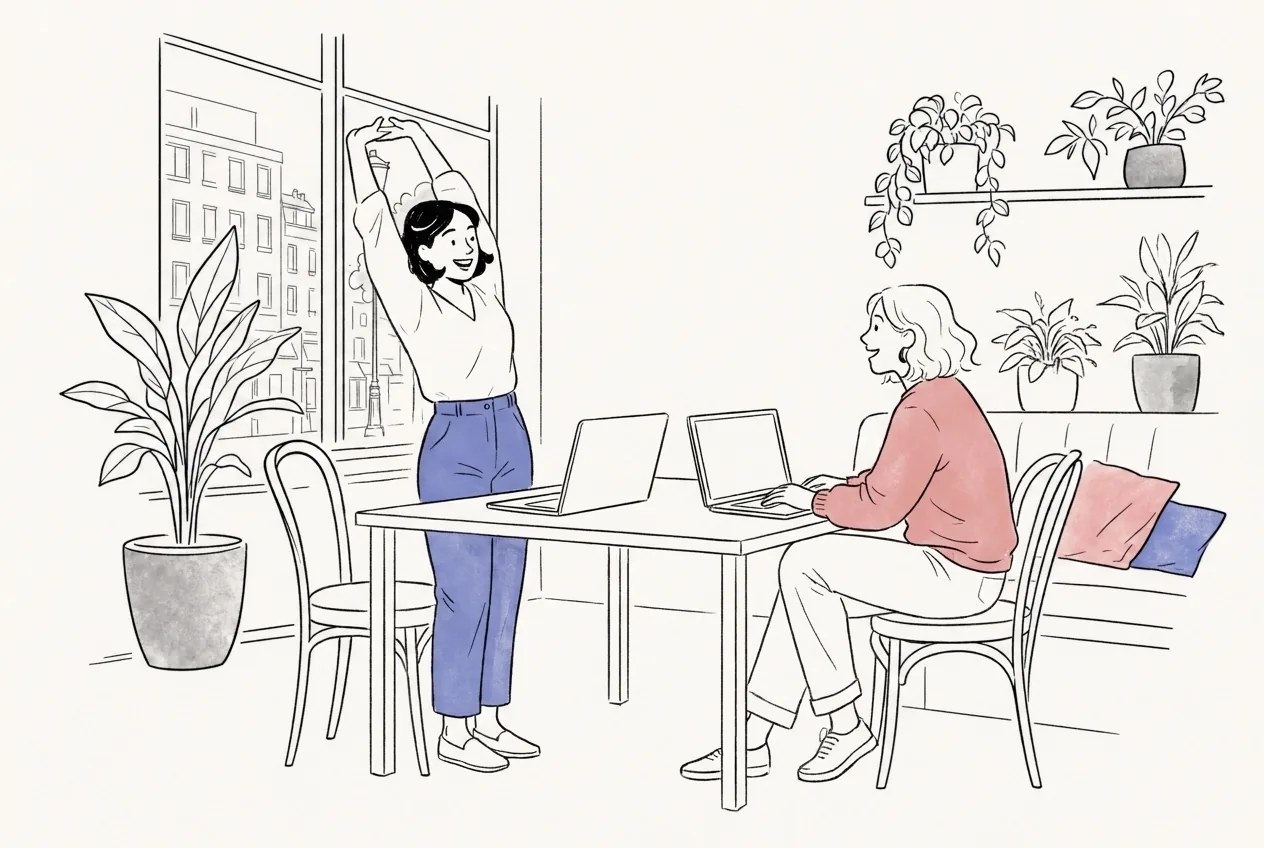
Key points
- The highest risk is in people who sit a lot and move little.
- 60 to 75 minutes of moderate activity a day largely offsets the risk of long sitting.
- Watching TV more than 3 to 5 hours a day was linked to higher risk even in active people.
- A practical rule: stand up every 30 to 60 minutes.
Why sitting is its own problem
Many Americans spend most of their waking hours sitting: at work, in the car and in front of screens. Prolonged sitting is linked to higher risk of death, heart disease and type 2 diabetes, even among people who exercise.
What a meta-analysis of more than a million people found
Pooling 16 studies with more than one million adults, researchers found that people who sat more than 8 hours a day and were inactive had the highest risk of death. Among those who got 60 to 75 minutes of moderate activity a day, high sitting time did not increase mortality. TV viewing of 3 to 5 hours or more a day was linked to higher risk even in active people (Ekelund et al., 2016).
What the guidelines say
The Physical Activity Guidelines for Americans (Piercy et al., 2018) and WHO guidelines (Bull et al., 2020) advise adults to sit less and replace sitting with activity of any intensity.
Simple habits for the workday
- Stand up every 30 to 60 minutes.
- Take phone calls standing or walking.
- Walk to a colleague instead of sending a message.
- Use a farther restroom or the stairs.
- Take a walk at lunch.
A 3-minute micro-break
- Shoulder rolls, 10 times.
- Neck stretches side to side.
- Squats from a chair, 10 times.
- Calf raises, 15 times.
- A short walk around the office.
A caveat
These studies are observational, but the findings are consistent, and moving more carries little risk.
Frequently asked questions
Is a standing desk the answer?
Standing all day has its own problems. The goal is to alternate sitting, standing and moving.
How often should I take breaks?
Every 30 to 60 minutes, stand up and move for a few minutes.
Sources
- Ekelund et al. (2016). Does physical activity attenuate, or even eliminate, the detrimental association of sitting time with mortality? A harmonised meta-analysis of data from more than 1 million men and women. The Lancet 388(10051):1302-1310. doi:10.1016/S0140-6736(16)30370-1
- Bull et al. (2020). World Health Organization 2020 guidelines on physical activity and sedentary behaviour. British Journal of Sports Medicine 54(24):1451-1462. doi:10.1136/bjsports-2020-102955
- Piercy et al. (2018). The Physical Activity Guidelines for Americans. JAMA 320(19):2020. doi:10.1001/jama.2018.14854
Keep reading
 Physical Activity · Myth or fact
Do you really need 10,000 steps a day? What the research says
Where the 10,000-step goal came from and what meta-analyses show about daily steps and mortality by age, including where benefits level off.
 Physical Activity
Strength training at home in 15 minutes: why and how
Why guidelines recommend muscle strengthening twice a week, what a meta-analysis found about strength training and longevity, and a 15-minute no-equipment routine.
 Physical Activity · Guide
Physical activity: how much exercise do adults need?
The Physical Activity Guidelines for Americans in plain English: 150 to 300 minutes of moderate activity a week, muscle strengthening and why every minute counts.
Related topics from other pillars
Loneliness, hearing loss and dementia: what you can change
What the Lancet Commission found about 12 modifiable dementia risk factors, including social isolation and hearing loss, and practical steps to lower risk.
 Nutrition
Vitamin D: who really needs supplements?
What the VITAL trial and a meta-analysis of 81 randomized trials found about vitamin D supplements, and who may still need them.
Physical Activity tools
IPAQ: International Physical Activity Questionnaire (short)
Calculates your MET-minutes per week and your activity level.
QuizDo you meet the Physical Activity Guidelines? Check
Minutes of moderate and vigorous activity per week, plus strength training.
Quiz30-second chair stand test (for adults 60+)
How many times can you stand up from a chair in 30 seconds? Compared with CDC norms.
PDF · TrackerMonthly step tracker
Write down your daily steps and track your progress.
PDF · Log15-minute home strength workout + training log
A no-equipment routine with an 8-week rep log.
PDF · Card + trackerBalance exercises for adults 60+
A safe balance and leg-strength routine with a 4-week tracker.