Dietary fats: olive oil, butter and your heart
Nutrition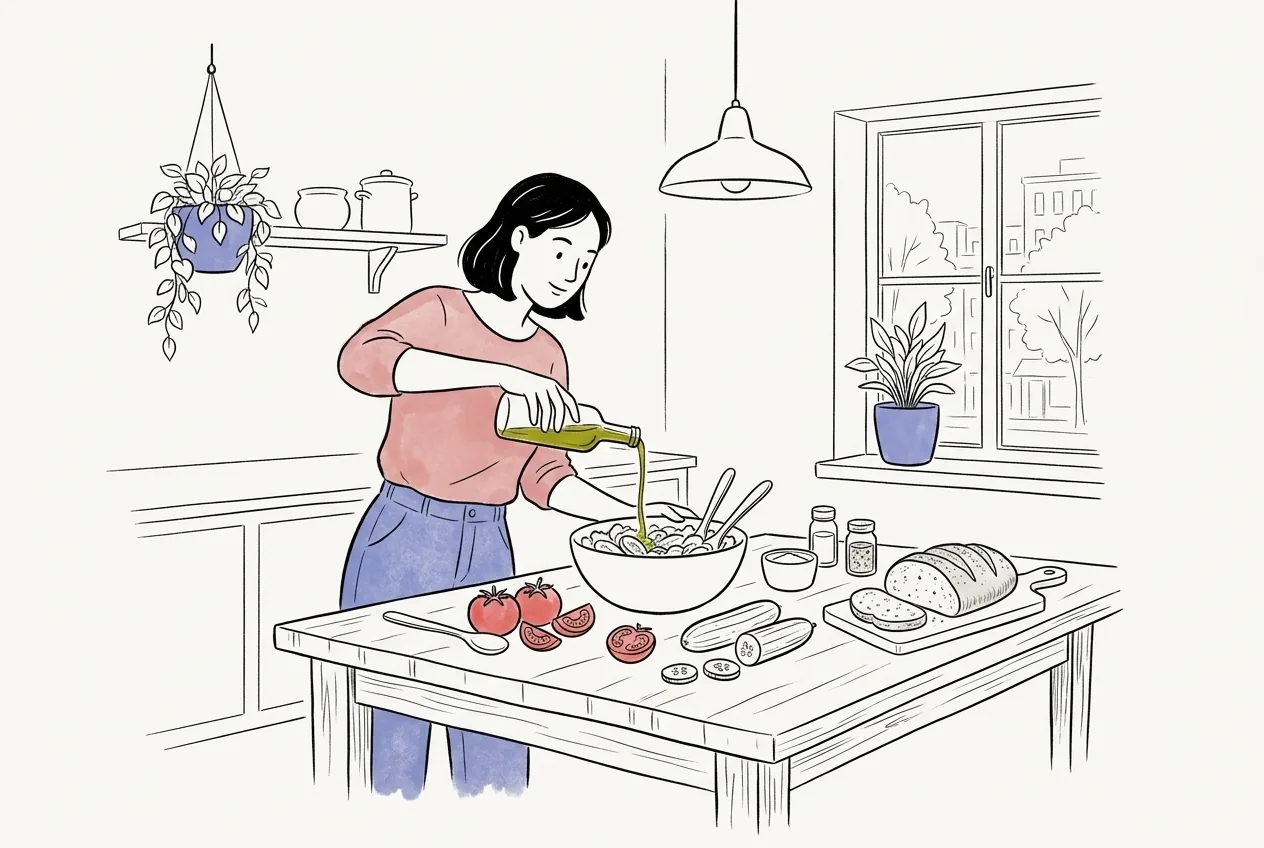
Key points
- Replacing saturated fat with polyunsaturated fat lowers cardiovascular risk by about 30%.
- More than ½ tablespoon of olive oil a day was linked to 19% lower mortality.
- What you replace fat with matters: refined carbs instead of fat bring no benefit.
- Olive, canola, soybean and other vegetable oils are good everyday choices.
The American Heart Association position
In a 2017 presidential advisory, the American Heart Association reviewed randomized trials and concluded that replacing saturated fat with polyunsaturated vegetable oils lowered cardiovascular disease by about 30%, an effect similar to cholesterol-lowering statins. Replacing saturated fat with refined carbohydrates and sugars did not lower risk (Sacks et al., 2017).
Olive oil
In more than 90,000 U.S. adults followed for 28 years in the Nurses’ Health Study and the Health Professionals Follow-up Study, those who consumed more than ½ tablespoon of olive oil a day had a 19% lower risk of death from any cause than those who rarely used it. Replacing about 10 g a day of butter, margarine or mayonnaise with olive oil was linked to 8% to 34% lower risk of death from various causes (Guasch-Ferré et al., 2022).
In the PREDIMED randomized trial, a Mediterranean diet with extra-virgin olive oil was followed by about 30% fewer major cardiovascular events (Estruch et al., 2018).
In practice
- Cook with olive or canola oil instead of butter.
- Dress salads with olive oil and vinegar.
- Choose fish, nuts and avocado more often than fatty and processed meat.
- Do not swap fat for sugar: “fat-free” cookies are not a health food.
Frequently asked questions
Is coconut oil healthy?
No. It is very high in saturated fat and raises LDL cholesterol. The American Heart Association advises against it.
How much saturated fat is too much?
The Dietary Guidelines recommend less than 10% of calories; the AHA suggests about 5% to 6% for people who need to lower LDL cholesterol.
Sources
- Sacks et al. (2017). Dietary Fats and Cardiovascular Disease: A Presidential Advisory From the American Heart Association. Circulation 136(3). doi:10.1161/CIR.0000000000000510
- Guasch-Ferré et al. (2022). Consumption of Olive Oil and Risk of Total and Cause-Specific Mortality Among U.S. Adults. Journal of the American College of Cardiology 79(2):101-112. doi:10.1016/j.jacc.2021.10.041
- Estruch et al. (2018). Primary Prevention of Cardiovascular Disease with a Mediterranean Diet Supplemented with Extra-Virgin Olive Oil or Nuts. New England Journal of Medicine 378(25). doi:10.1056/NEJMoa1800389
Keep reading
 Nutrition
Milk and dairy: how much do adults really need?
What a New England Journal of Medicine review says about the three-cups-a-day advice, dairy and fractures, and how to get calcium if you skip dairy.
 Nutrition
Trans fats: the most harmful type of fat
Why industrial trans fats raise heart disease risk so sharply, what the FDA ban on partially hydrogenated oils means and how to spot trans fat today.
 Nutrition
Eggs and cholesterol: how many is OK?
What large cohorts and a BMJ meta-analysis found about eggs and heart disease, why another study raised concerns about dietary cholesterol, and practical advice.
Nutrition tools
MEDAS: how Mediterranean is your diet?
The PREDIMED trial screener (13 questions; we deliberately removed the wine item).
QuizHow much fiber do you eat? Calculator
A rough estimate of your daily fiber based on your habits.
QuizToo much sodium? Self-check
The habits that affect your sodium intake the most.
PDF · PlannerWeekly meal planner using the plate method
A 7-day planner with plate-method prompts and space for your grocery list.
PDF · ChecklistHealthy grocery list
A grocery checklist by food group, with blank lines for your own items.
PDF · Cheat sheetCheat sheet: read a Nutrition Facts label in one minute
A wallet or fridge card with % Daily Value rules and what to look for.