Sleep and your heart: how sleep duration is linked to heart attack and stroke
SleepKey points
- Short sleep: 48% higher coronary heart disease risk, 15% higher stroke risk.
- Long sleep: 38% higher coronary risk and 65% higher stroke risk (likely a marker of illness).
- Seven to eight hours appears optimal.
- Sleep apnea is a separate, important risk factor for the heart.
What the research shows
Meta-analysis. Pooling 15 prospective studies with 474,684 participants, researchers found that short sleep was linked to a 48% higher risk of developing or dying from coronary heart disease and a 15% higher risk of stroke. Long sleep was linked to a 38% higher risk of coronary heart disease and a 65% higher risk of stroke (Cappuccio et al., 2011). As with mortality (Cappuccio et al., 2010), long sleep likely reflects underlying illness.
Sleep apnea. Obstructive sleep apnea affects an estimated 936 million adults worldwide and is linked to high blood pressure, atrial fibrillation, heart failure and stroke (Benjafield et al., 2019).
The American Heart Association now includes sleep among its “Life’s Essential 8” measures of heart health, recommending 7 to 9 hours for adults.
In practice
- Aim for 7 to 8 hours of sleep on a regular schedule.
- Get evaluated for sleep apnea if you snore and feel sleepy during the day.
- Manage the other heart risk factors too: blood pressure, cholesterol, activity and smoking.
Frequently asked questions
Is sleep part of heart health guidelines?
Yes. In 2022 the American Heart Association added sleep duration to its "Life’s Essential 8" checklist for cardiovascular health.
Does napping help my heart?
A short nap is fine, but it does not replace enough nighttime sleep.
Sources
- Cappuccio et al. (2011). Sleep duration predicts cardiovascular outcomes: a systematic review and meta-analysis of prospective studies. European Heart Journal 32(12):1484-1492. doi:10.1093/eurheartj/ehr007
- Cappuccio et al. (2010). Sleep Duration and All-Cause Mortality: A Systematic Review and Meta-Analysis of Prospective Studies. Sleep 33(5):585-592. doi:10.1093/sleep/33.5.585
- Benjafield et al. (2019). Estimation of the global prevalence and burden of obstructive sleep apnoea: a literature-based analysis. The Lancet Respiratory Medicine 7(8):687-698. doi:10.1016/S2213-2600(19)30198-5
Keep reading
Waking up at night: what is normal and what is not
Why brief awakenings at night are a normal part of sleep, how they change with age and what to do when you cannot fall back asleep.
SleepBetter sleep improves mental health: evidence from 65 trials
What a meta-analysis of 65 randomized trials found: improving sleep reduces depression, anxiety and stress, and the more sleep improves, the bigger the benefit.
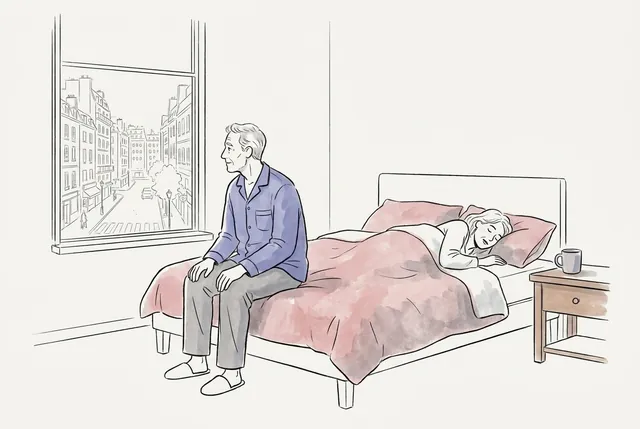 Sleep
How sleep changes with age and what to do about it
How deep sleep and nighttime awakenings change across the lifespan, how much sleep older adults need and why sleeping pills are risky after 65.
Sleep tools
How much sleep do you need? Recommendations by age
Recommendations from the American Academy of Sleep Medicine and the National Sleep Foundation.
QuizSocial jet lag calculator
The difference in your sleep midpoint between workdays and days off.
QuizWhen should you stop drinking coffee? Calculator
According to a meta-analysis, have a regular coffee at least about 8.8 hours before bed.
PDF · DiaryTwo-week sleep diary
Record bedtime, wake time, awakenings, caffeine, alcohol and how you feel.
PDF · TrackerMonthly 24-hour sleep tracker
A visual sleep rhythm tracker that shows your schedule and social jet lag.
PDF · ChecklistBedtime routine checklist
A step-by-step wind-down routine with a weekly tracker.