Energy drinks: how much caffeine is safe and who should avoid them
Risky Substances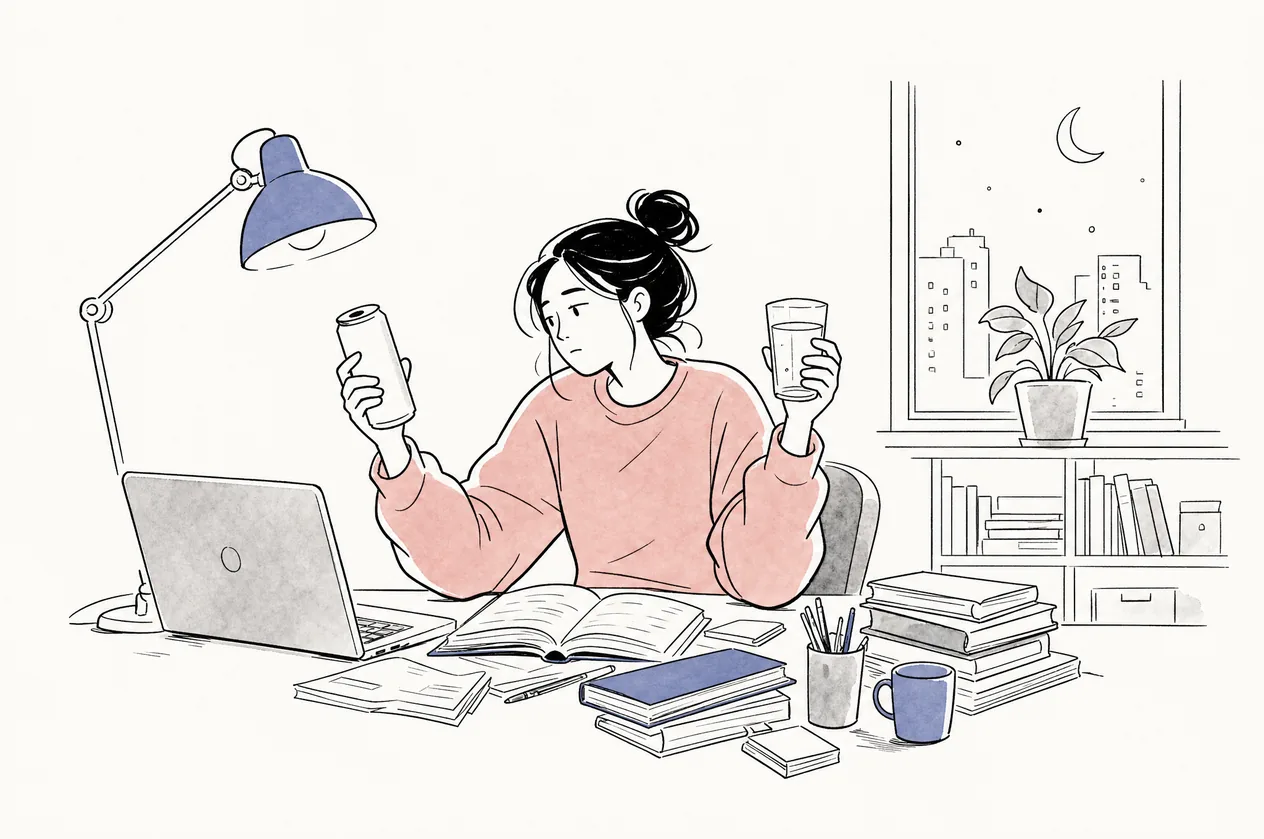
Key points
- Safe caffeine for healthy adults: up to 400 mg a day.
- Pregnancy: up to 200 mg (ACOG); teens: up to 2.5 mg/kg.
- A 32-oz energy drink raised blood pressure and prolonged the QT interval more than a caffeine-matched control.
- Energy drinks are not recommended for children and teens.
What is in energy drinks
Energy drinks contain caffeine, often in large amounts, plus sugar or sweeteners and ingredients such as taurine, guarana (another caffeine source) and B vitamins. Some cans contain as much caffeine as three or more cups of coffee.
How much caffeine is safe
A systematic review concluded that up to 400 mg a day is not associated with adverse effects in healthy adults, up to 300 mg in healthy pregnant women and up to 2.5 mg per kg of body weight in children and teens (Wikoff et al., 2017). ACOG advises pregnant women to stay under 200 mg a day.
What the research shows
Heart rhythm. In a randomized crossover trial, healthy young adults drank 32 oz of an energy drink or a control drink with the same caffeine. The energy drink raised blood pressure more and prolonged the QTc interval on ECG, a change linked to arrhythmia risk (Shah et al., 2019).
Children and teens. A review in Pediatrics concluded that energy drinks have no therapeutic benefit and may put children, teens and young adults at risk of serious adverse effects (Seifert et al., 2011). The American Academy of Pediatrics says energy drinks have no place in the diets of children and adolescents.
Practical tips
- Count all sources: coffee, tea, soda and pre-workout products.
- Never mix energy drinks with alcohol.
- Do not use energy drinks to stay awake while driving; pull over and rest.
- Choose water and sleep for energy.
Frequently asked questions
How much caffeine is in an energy drink?
From about 80 mg in a small can to 300 mg or more in some 16-oz cans. Check the label.
Are energy drinks the same as sports drinks?
No. Sports drinks contain sugar and electrolytes but usually no caffeine. Neither is needed by most kids.
Sources
- Wikoff et al. (2017). Systematic review of the potential adverse effects of caffeine consumption in healthy adults, pregnant women, adolescents, and children. Food and Chemical Toxicology 109:585-648. doi:10.1016/j.fct.2017.04.002
- Shah et al. (2019). Impact of High Volume Energy Drink Consumption on Electrocardiographic and Blood Pressure Parameters: A Randomized Trial. Journal of the American Heart Association 8(11). doi:10.1161/JAHA.118.011318
- Seifert et al. (2011). Health Effects of Energy Drinks on Children, Adolescents, and Young Adults. Pediatrics 127(3):511-528. doi:10.1542/peds.2009-3592
Keep reading
 Risky Substances
Smartphones and social media: when a habit becomes an addiction
How common problematic smartphone use is, how it is linked to anxiety, depression and sleep, and what experiments found when people limited social media.
Risky SubstancesHeated tobacco products: are they safer than cigarettes?
How heat-not-burn tobacco works, what a systematic review found about toxicant levels and industry funding, and what really helps people quit.
Risky SubstancesAlcohol and cancer: what the labels do not tell you
How alcohol causes cancer, what global estimates and a meta-analysis show about even light drinking, and what the U.S. Surgeon General has said.
Related topics from other pillars
Risky Substances tools
AUDIT: the WHO alcohol use test
10 WHO questions about how often and how much you drink, and its consequences.
QuizAUDIT-C: quick alcohol check
The first three AUDIT questions: a one-minute screen widely used in U.S. primary care.
QuizFagerström Test for Nicotine Dependence
6 questions to gauge physical dependence on nicotine.
PDF · PlanQuit smoking plan
A personal plan: quit date, reasons, triggers, substitutes and support.
PDF · TrackerSmoke-free days tracker
A monthly tracker with craving ratings and notes.
PDF · DiaryWeekly drink diary
Record how much you drink and in what situations.