How to build a healthy plate: a simple method for every day
Nutrition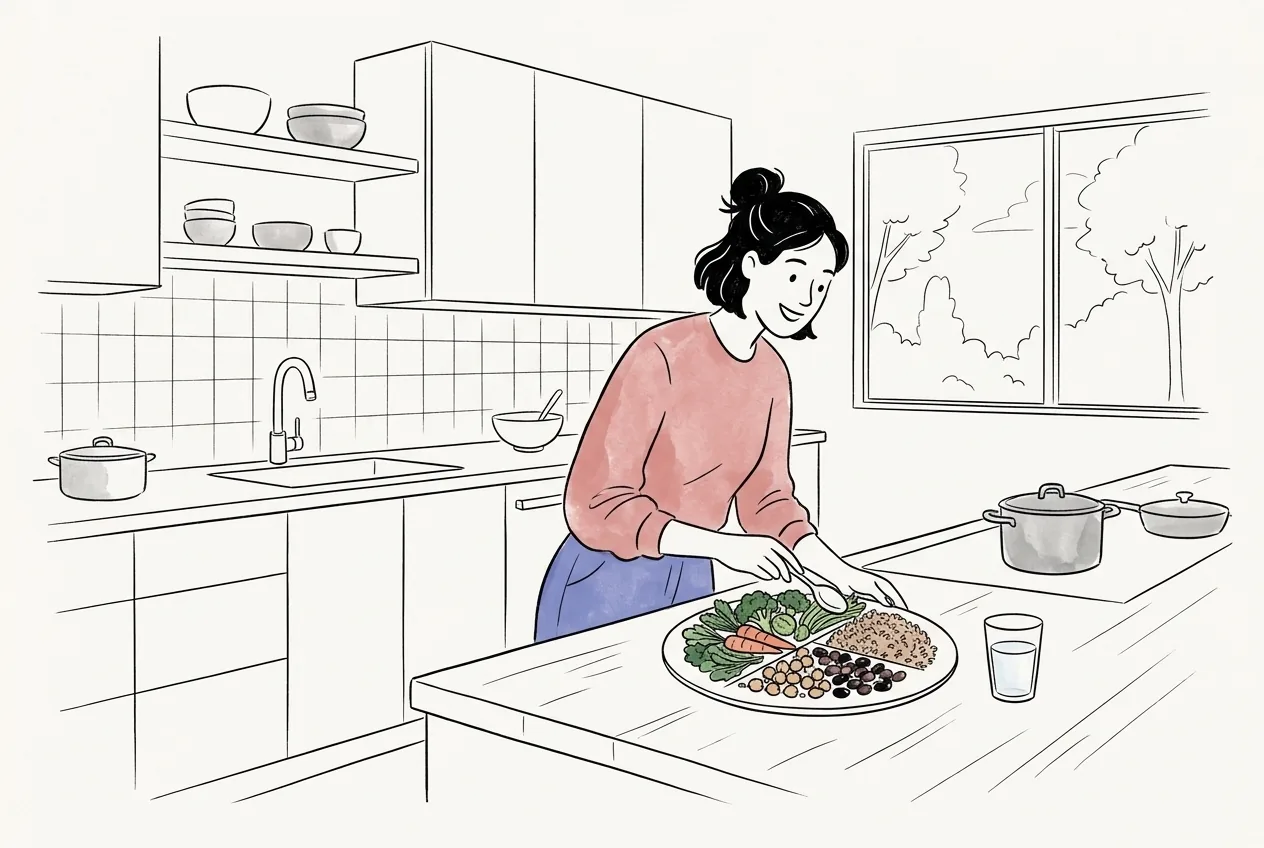
Key points
- Half the plate: vegetables and fruit, with more vegetables than fruit.
- A quarter: whole grains such as brown rice, oats, quinoa or whole-wheat bread.
- A quarter: protein, such as beans, fish, poultry, eggs or nuts; red and processed meat less often.
- A meta-analysis linked about 800 g (roughly 10 servings) of fruit and vegetables a day with the lowest risk of death.
The plate method in one sentence
Take an ordinary 9- to 10-inch dinner plate and divide it in your mind: half vegetables and fruit, a quarter whole grains, a quarter protein. Add water instead of a sugary drink and a little healthy fat such as olive oil or nuts.
You do not need to count calories, so it is easy to use every day. The USDA’s MyPlate, the Harvard Healthy Eating Plate and the EAT–Lancet Commission all use a similar model (Willett et al., 2019).
Half the plate: vegetables and fruit
Vegetables and fruit provide fiber, potassium, vitamins and plant compounds with few calories. A meta-analysis of 95 studies found that the more fruit and vegetables people ate, the lower their risk of cardiovascular disease and death from any cause. The lowest risk was seen at about 800 g a day, twice the WHO minimum of 400 g (Aune et al., 2017).
Practical tips:
- Frozen vegetables and berries are as nutritious as fresh and cost less in winter.
- Add vegetables to breakfast: spinach in eggs, tomatoes on whole-grain toast.
- Eat fruit whole rather than drinking it as juice.
A quarter of the plate: whole grains
Whole grains keep the bran and germ of the kernel, and with them fiber and minerals. A series of meta-analyses in The Lancet found that people who ate the most whole grains and fiber had a 15% to 30% lower risk of death, coronary heart disease, stroke, type 2 diabetes and colorectal cancer than those who ate the least (Reynolds et al., 2019).
Good choices: oatmeal, brown rice, barley, quinoa, bulgur, buckwheat, whole-wheat pasta and bread where “whole wheat” is the first ingredient.
A quarter of the plate: protein
The best everyday protein sources are beans, lentils and peas, fish, nuts and seeds, plus poultry and eggs. Eat red meat less often and processed meat (bacon, hot dogs, deli meats) as rarely as possible.
Beans are an underrated food: they combine protein and fiber. In the Mediterranean diet, whose benefits were confirmed in the PREDIMED randomized trial, legumes, fish and nuts play a major role (Estruch et al., 2018).
Sample balanced plates
| Meal | Half | Quarter | Quarter |
|---|---|---|---|
| Lunch | Big green salad, roasted broccoli | Quinoa | Black bean burger |
| Dinner | Roasted vegetables, greens | Brown rice | Baked salmon |
| Breakfast | Berries, a banana | Oatmeal | A handful of walnuts |
Common mistakes
- Vegetables as decoration. A couple of lettuce leaves are not half a plate.
- A huge portion of pasta or bread pushes vegetables off the plate.
- Healthy food, unhealthy toppings: heavy dressings or salty sauces undo the benefits of vegetables.
The plate method is a guide, not a strict rule. Even getting partway there improves the quality of your diet.
Frequently asked questions
How many fruits and vegetables do I need a day?
The Dietary Guidelines for Americans recommend about 2½ cups of vegetables and 2 cups of fruit a day for a 2,000-calorie diet. In a large meta-analysis, the lowest risk of cardiovascular disease and death was seen at about 800 g a day.
Do potatoes count as a vegetable?
On the plate method, potatoes usually go in the starchy quarter with grains rather than in the vegetable half.
How do I apply the plate to soups, chili or stir-fries?
A vegetable-packed chili with beans already combines vegetables and protein. Add a side salad and a slice of whole-grain bread or brown rice and you have a balanced meal.
Sources
- Aune et al. (2017). Fruit and vegetable intake and the risk of cardiovascular disease, total cancer and all-cause mortality—a systematic review and dose-response meta-analysis of prospective studies. International Journal of Epidemiology 46(3):1029-1056. doi:10.1093/ije/dyw319
- Reynolds et al. (2019). Carbohydrate quality and human health: a series of systematic reviews and meta-analyses. The Lancet 393(10170):434-445. doi:10.1016/S0140-6736(18)31809-9
- Willett et al. (2019). Food in the Anthropocene: the EAT–Lancet Commission on healthy diets from sustainable food systems. The Lancet 393(10170):447-492. doi:10.1016/S0140-6736(18)31788-4
- Estruch et al. (2018). Primary Prevention of Cardiovascular Disease with a Mediterranean Diet Supplemented with Extra-Virgin Olive Oil or Nuts. New England Journal of Medicine 378(25). doi:10.1056/NEJMoa1800389
- U.S. Department of Agriculture. MyPlate. www.myplate.gov
- Harvard T.H. Chan School of Public Health. Healthy Eating Plate. nutritionsource.hsph.harvard.edu
Keep reading
 Nutrition · Guide
Nutrition in lifestyle medicine: a guide to whole, mostly plant-based eating
What "whole, mostly plant-based" eating means, why it is linked to lower heart disease risk and how to start without going to extremes. With scientific sources.
 Nutrition
Fiber: how much you need per day and where to get it
How much dietary fiber adults need, what the Lancet meta-analyses show about fiber and chronic disease, and the easiest ways to eat more.
 Nutrition
How to read a Nutrition Facts label: 5 things to check
A one-minute guide to the U.S. Nutrition Facts label: serving size, % Daily Value, sodium, added sugars, fiber and the ingredient list, plus common packaging traps.
Nutrition tools
MEDAS: how Mediterranean is your diet?
The PREDIMED trial screener (13 questions; we deliberately removed the wine item).
QuizHow much fiber do you eat? Calculator
A rough estimate of your daily fiber based on your habits.
QuizToo much sodium? Self-check
The habits that affect your sodium intake the most.
PDF · PlannerWeekly meal planner using the plate method
A 7-day planner with plate-method prompts and space for your grocery list.
PDF · ChecklistHealthy grocery list
A grocery checklist by food group, with blank lines for your own items.
PDF · Cheat sheetCheat sheet: read a Nutrition Facts label in one minute
A wallet or fridge card with % Daily Value rules and what to look for.