Holidays without alcohol: celebrate without regrets
Risky Substances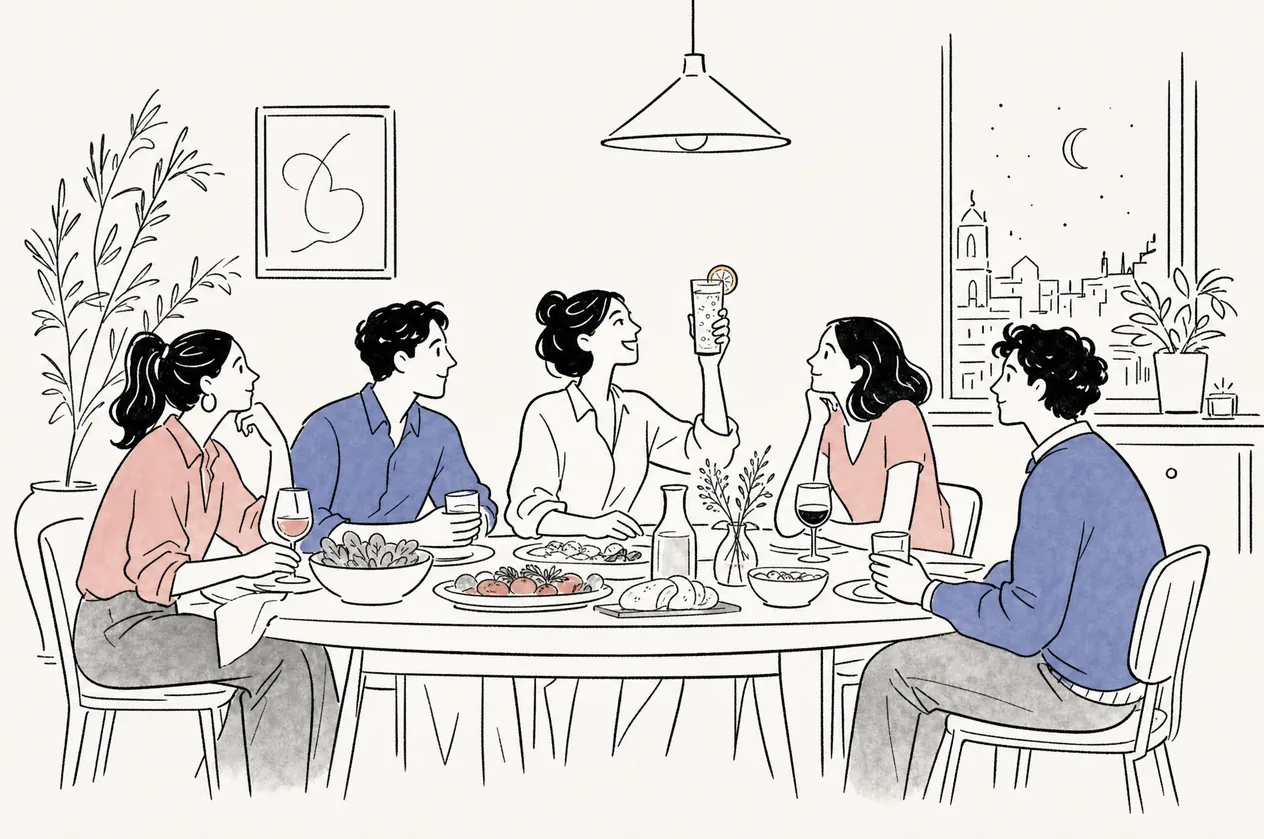
Key points
- U.S. cardiac deaths are highest on December 25 and 26 and January 1.
- In a Swedish study, heart attack risk on Christmas Eve was 37% higher than usual.
- Large amounts of alcohol can trigger atrial fibrillation, "holiday heart syndrome".
- Quitting alcohol reduced atrial fibrillation recurrences in a randomized trial.
- Prepare a short reply to pressure and appealing nonalcoholic drinks.
What happens to the heart over the holidays
An analysis of U.S. death certificates over several decades found that cardiac deaths peak on December 25 and 26 and January 1, more than on any other days of the year (Phillips et al., 2004).
The Swedish SWEDEHEART registry, covering more than 280,000 heart attacks, found that the risk of heart attack on Christmas Eve was 37% higher than on control days, peaking around 10 p.m. (Mohammad et al., 2018). Likely contributors include emotional stress, overeating, alcohol and delaying care.
Alcohol and heart rhythm
Heavy drinking over a short time can trigger atrial fibrillation. In a randomized trial of regular drinkers with this rhythm disorder, abstaining for 6 months reduced recurrences and lengthened the time until they occurred (Voskoboinik et al., 2020).
A global analysis concluded that the level of drinking that minimizes health harm is zero (GBD 2016 Alcohol Collaborators, 2018). Holidays are also a time of more drunk-driving crashes on U.S. roads.
How to celebrate without alcohol
Have a reply ready
- “Thanks, I’m not drinking tonight.”
- “I’m driving.”
- “I want to feel good tomorrow.” You do not need to explain more than you want.
Keep a drink in your hand
- sparkling water with lime and mint;
- cranberry spritzer or apple cider;
- hot spiced tea or nonalcoholic mulled cider;
- nonalcoholic sparkling wine or mocktails.
Shift the focus from drinking
- a walk after dinner, ice skating, board games, caroling;
- cooking together instead of toasting;
- plans for the next morning, a good reason not to drink.
If you do drink
- alternate each drink with a glass of water;
- eat before and while drinking;
- never drive after drinking, even a small amount;
- do not mix alcohol with sleeping pills or painkillers.
See also: A month without alcohol and the AUDIT-C quiz.
Frequently asked questions
How do I turn down a drink without offending the host?
Keep it short and friendly: "Thanks, I’m not drinking tonight," "I’m driving," "I feel better without it." Holding a drink of your own means fewer offers.
Are nonalcoholic beer and wine a good alternative?
For most adults, yes, but they can contain up to 0.5% alcohol and can be a trigger for people in recovery. During pregnancy, choose 0.0% products.
What is "holiday heart syndrome"?
A term for heart rhythm disturbances, most often atrial fibrillation, after heavy drinking in people who usually feel healthy.
Sources
- Phillips et al. (2004). Cardiac Mortality Is Higher Around Christmas and New Year’s Than at Any Other Time. Circulation 110(25):3781-3788. doi:10.1161/01.CIR.0000151424.02045.F7
- Mohammad et al. (2018). Christmas, national holidays, sport events, and time factors as triggers of acute myocardial infarction: SWEDEHEART observational study 1998-2013. BMJ :k4811. doi:10.1136/bmj.k4811
- Voskoboinik et al. (2020). Alcohol Abstinence in Drinkers with Atrial Fibrillation. New England Journal of Medicine 382(1):20-28. doi:10.1056/NEJMoa1817591
- Griswold et al. (2018). Alcohol use and burden for 195 countries and territories, 1990–2016: a systematic analysis for the Global Burden of Disease Study 2016. The Lancet 392(10152):1015-1035. doi:10.1016/S0140-6736(18)31310-2
Keep reading
Gaming disorder: when video games become a problem
How common gaming disorder is, the WHO criteria in ICD-11, warning signs to watch for in teens and adults, and how it is treated.
Risky SubstancesHow to assess your drinking and why a short talk with a doctor helps
How the WHO AUDIT test works, what a Cochrane review found about brief alcohol interventions in primary care and why assessment is the first step.
Risky SubstancesWhich drugs are most harmful? What a UK expert analysis found
How UK experts ranked 20 drugs on 16 measures of harm to users and others, why alcohol ranked most harmful overall and why legal status does not reflect harm.
Risky Substances tools
AUDIT: the WHO alcohol use test
10 WHO questions about how often and how much you drink, and its consequences.
QuizAUDIT-C: quick alcohol check
The first three AUDIT questions: a one-minute screen widely used in U.S. primary care.
QuizFagerström Test for Nicotine Dependence
6 questions to gauge physical dependence on nicotine.
PDF · PlanQuit smoking plan
A personal plan: quit date, reasons, triggers, substitutes and support.
PDF · TrackerSmoke-free days tracker
A monthly tracker with craving ratings and notes.
PDF · DiaryWeekly drink diary
Record how much you drink and in what situations.