Secondhand smoke: the harm to others and to children
Risky SubstancesKey points
- Secondhand smoke caused about 603,000 deaths a year worldwide (2004 data).
- 28% of deaths from secondhand smoke were children.
- After a smoke-free law, heart attack admissions in Helena fell from 40 to 24 over six months.
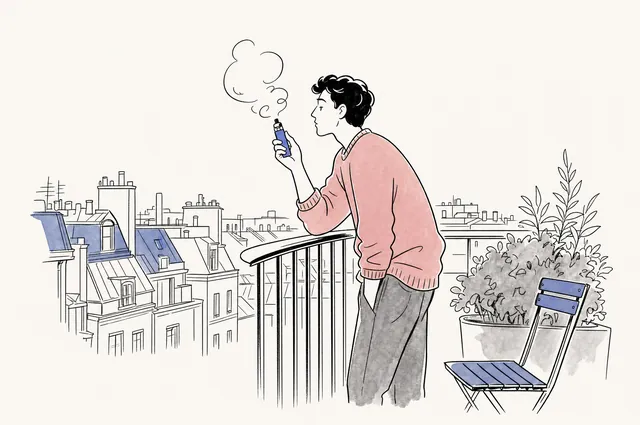
- Opening windows or smoking on a balcony does not fully protect others.
What secondhand smoke is
Secondhand smoke is the combination of smoke from a burning cigarette and smoke exhaled by a smoker. It contains thousands of chemicals, including dozens that cause cancer. The U.S. Surgeon General has concluded that there is no risk-free level of exposure.
The scale of harm
An analysis of 192 countries estimated that in 2004, secondhand smoke caused about 603,000 deaths worldwide, and 28% of them were children (Öberg et al., 2011).
Smoke-free laws work
In Helena, Montana, admissions for heart attacks fell from an average of about 40 to 24 during the six months a smoke-free law was in effect, then rose again after it was suspended (Sargent et al., 2004). Many later studies across the U.S. confirmed that smoke-free laws reduce heart attacks.
Children are most vulnerable
Secondhand smoke raises children’s risk of sudden infant death syndrome, asthma attacks, ear infections and respiratory infections.
How to protect your loved ones
- Make your home and car completely smoke-free.
- Do not allow smoking around children, even outdoors nearby.
- Quitting is the best protection for everyone; people who smoke lose more than 10 years of life on average (Jha et al., 2013).
Frequently asked questions
Does vaping indoors expose others?
Yes. E-cigarette aerosol contains nicotine and other chemicals, so it is best not to vape around others, especially children.
What is thirdhand smoke?
Residue from tobacco smoke that clings to surfaces, clothes and dust and can be inhaled or ingested, especially by small children.
Sources
- Öberg et al. (2011). Worldwide burden of disease from exposure to second-hand smoke: a retrospective analysis of data from 192 countries. The Lancet 377(9760):139-146. doi:10.1016/S0140-6736(10)61388-8
- Sargent et al. (2004). Reduced incidence of admissions for myocardial infarction associated with public smoking ban: before and after study. BMJ 328(7446):977-980. doi:10.1136/bmj.38055.715683.55
- Jha et al. (2013). 21st-Century Hazards of Smoking and Benefits of Cessation in the United States. New England Journal of Medicine 368(4):341-350. doi:10.1056/NEJMsa1211128
- Centers for Disease Control and Prevention. Health Effects of Secondhand Smoke. www.cdc.gov
Keep reading
 Risky Substances
E-cigarettes and vaping: what we know about harms and benefits
Are vapes safer than cigarettes? What a Cochrane review and a NEJM trial found about quitting smoking, why vaping is not safe and why teens should not start.
Risky SubstancesAlcohol and cancer: what the labels do not tell you
How alcohol causes cancer, what global estimates and a meta-analysis show about even light drinking, and what the U.S. Surgeon General has said.
Risky Substances · Myth or factIs any amount of alcohol safe? The myth of the healthy glass of wine
Why newer research does not support the idea that moderate drinking is good for you, what the Global Burden of Disease found and how to cut back.
Risky Substances tools
AUDIT: the WHO alcohol use test
10 WHO questions about how often and how much you drink, and its consequences.
QuizAUDIT-C: quick alcohol check
The first three AUDIT questions: a one-minute screen widely used in U.S. primary care.
QuizFagerström Test for Nicotine Dependence
6 questions to gauge physical dependence on nicotine.
PDF · PlanQuit smoking plan
A personal plan: quit date, reasons, triggers, substitutes and support.
PDF · TrackerSmoke-free days tracker
A monthly tracker with craving ratings and notes.
PDF · DiaryWeekly drink diary
Record how much you drink and in what situations.